



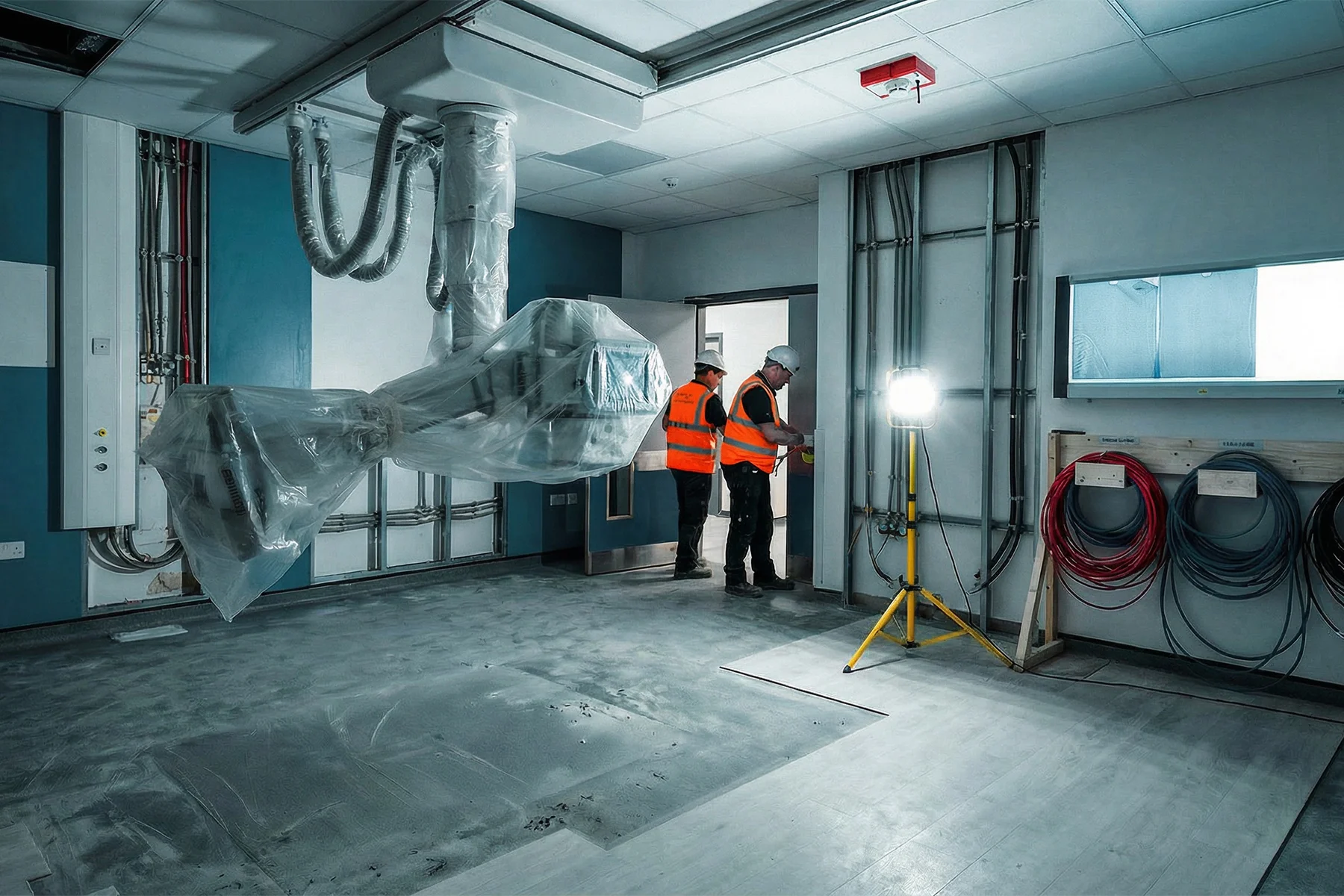
Hospitals make up some of society’s most essential infrastructure and take care of sick and vulnerable people, some with mobility issues. Because of these factors, fire safety is paramount. It becomes especially challenging to ensure adequate coverage when undergoing refurbishment work. This was the case with Szpital Praski, a hospital in Warsaw, Poland.
The project, which took place in 2021, involved a multi-phase refurbishment carried out within an active hospital environment. During the works, the permanent fire alarm system (SSI) was partially interrupted in certain zones, requiring a reliable temporary solution to maintain fire safety and evacuation capability without disrupting hospital operations.
WES3 as the Ideal Option
WES3 is Ramtech’s advanced wireless fire detection and evacuation system, developed for fast-changing, high-risk environments such as construction sites, industrial facilities, temporary structures, and refurbishment projects. Fully compliant with EN54-25, it delivers site-wide fire detection, evacuation alerts, and medical alarm functionality, without the need for cabling.
The primary challenge of this project lay in delivering uninterrupted fire protection within a live hospital environment where patient safety, clinical continuity, and regulatory compliance could not be compromised. The refurbishment was being carried out in carefully managed phases, meaning that different areas of the building were taken offline at different times, temporarily isolating sections of the permanent fire alarm system (SSI). This created a complex risk profile: vulnerable patients, including those with limited mobility, remained in adjacent zones; clinical procedures continued around the clock; and evacuation strategies had to remain fully operational despite shifting compartment boundaries.
At the same time, intrusive works such as cabling were prohibited due to infection control protocols, building constraints, and the need to avoid disruption to sensitive medical equipment. The solution therefore had to be rapidly deployable, fully compliant, easily reconfigurable as work zones evolved, and capable of integrating seamlessly into the hospital’s existing emergency procedures, without generating false alarms or operational downtime. To address these requirements, Ramtech partner Geo-Kat installed the following WES3 system configuration: 20 WES3 devices, 8 wireless smoke detectors, 11 manual call points and 1 Connect control panel.
Effortlessly Protecting Hospitals, Staff and Patients
The hospital opted for a wireless temporary system as it presented several operational and environmental challenges. For instance, cabling was not permitted due to the nature of the building and the hospital’s activity. Because of this, along with the frequent changes to work zones, the WES system was the only option as it offered comprehensive coverage without disrupting the facility’s daily operations.
Justyna Seed, Export Business Development Manager, at Ramtech explains: “In healthcare environments, there is no tolerance for reduced fire protection, even temporarily. At Szpital Praski, the priority was clear: patient safety and clinical continuity could not be compromised during refurbishment. WES3 provided a fully compliant, rapidly deployable solution that adapted without intrusive cabling or operational disruption. This project demonstrates that with the right wireless technology, hospitals can maintain uncompromised fire safety, even while their infrastructure is evolving.”
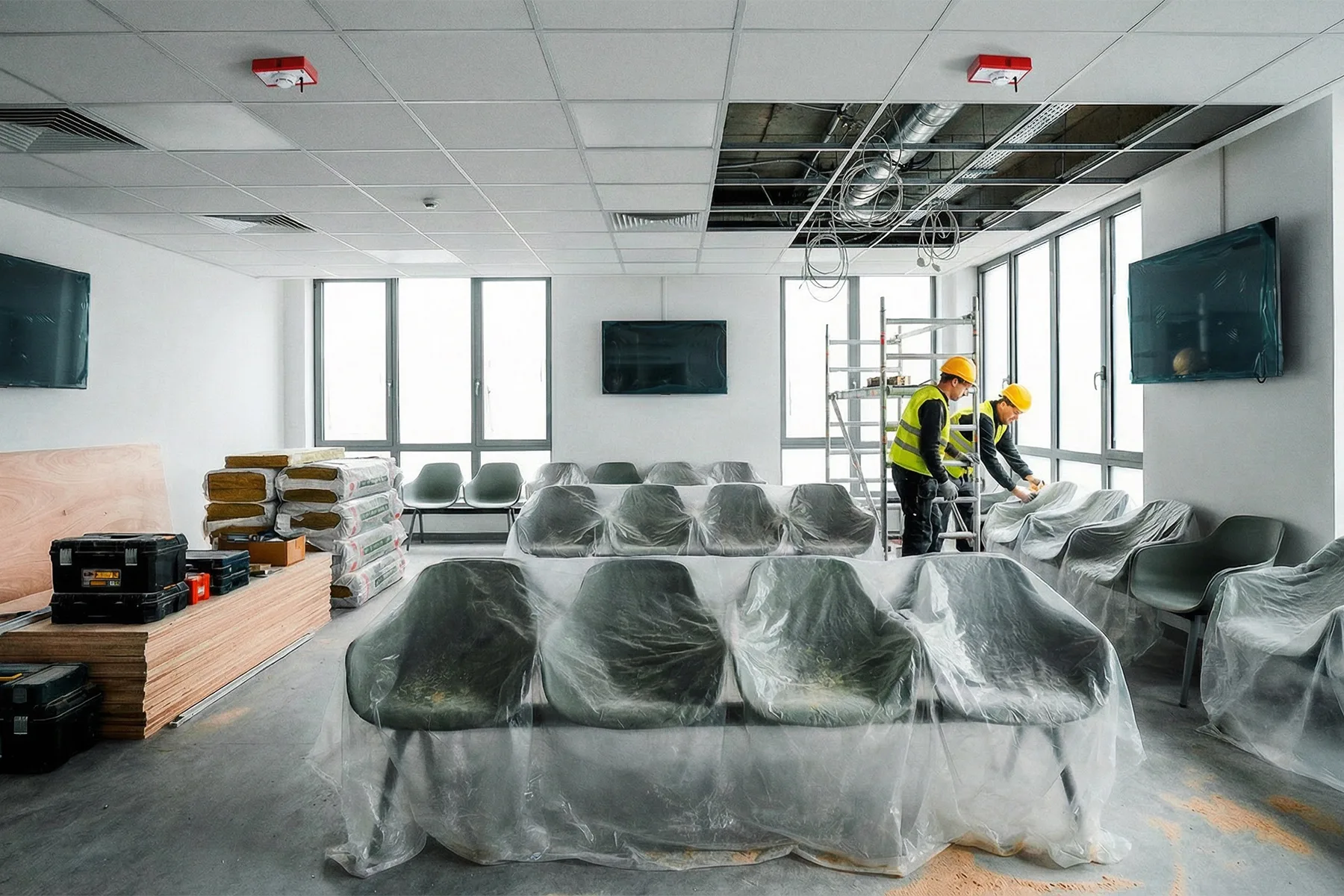
The refurbishment at Szpital Praski demonstrates that maintaining uncompromised fire protection during live hospital works is not only possible, but entirely achievable with the right technology. By deploying Ramtech’s WES3 as a temporary wireless solution, the hospital ensured continuous detection, clear evacuation signalling, and full operational continuity throughout each phase of the project. Critically, this was achieved without intrusive cabling, without disruption to patient care, and without compromising compliance or safety standards. In complex healthcare environments where vulnerable occupants, evolving work zones, and strict infection control measures intersect, flexibility and reliability are essential. This project highlights how advanced wireless fire systems can seamlessly bridge gaps in permanent infrastructure, safeguarding patients, staff, and visitors at every stage of refurbishment.