



According to French law, Hospitals are classified as Établissements recevant du public, or ERPs, and therefore must follow strict regulations to ensure the safety of the structure as a whole when undergoing renovations. From general provisions to additional constraints due to the presence of vulnerable people, it’s important to understand how to ensure the safety of healthcare facilities and why temporary fire detection may be an ideal solution.
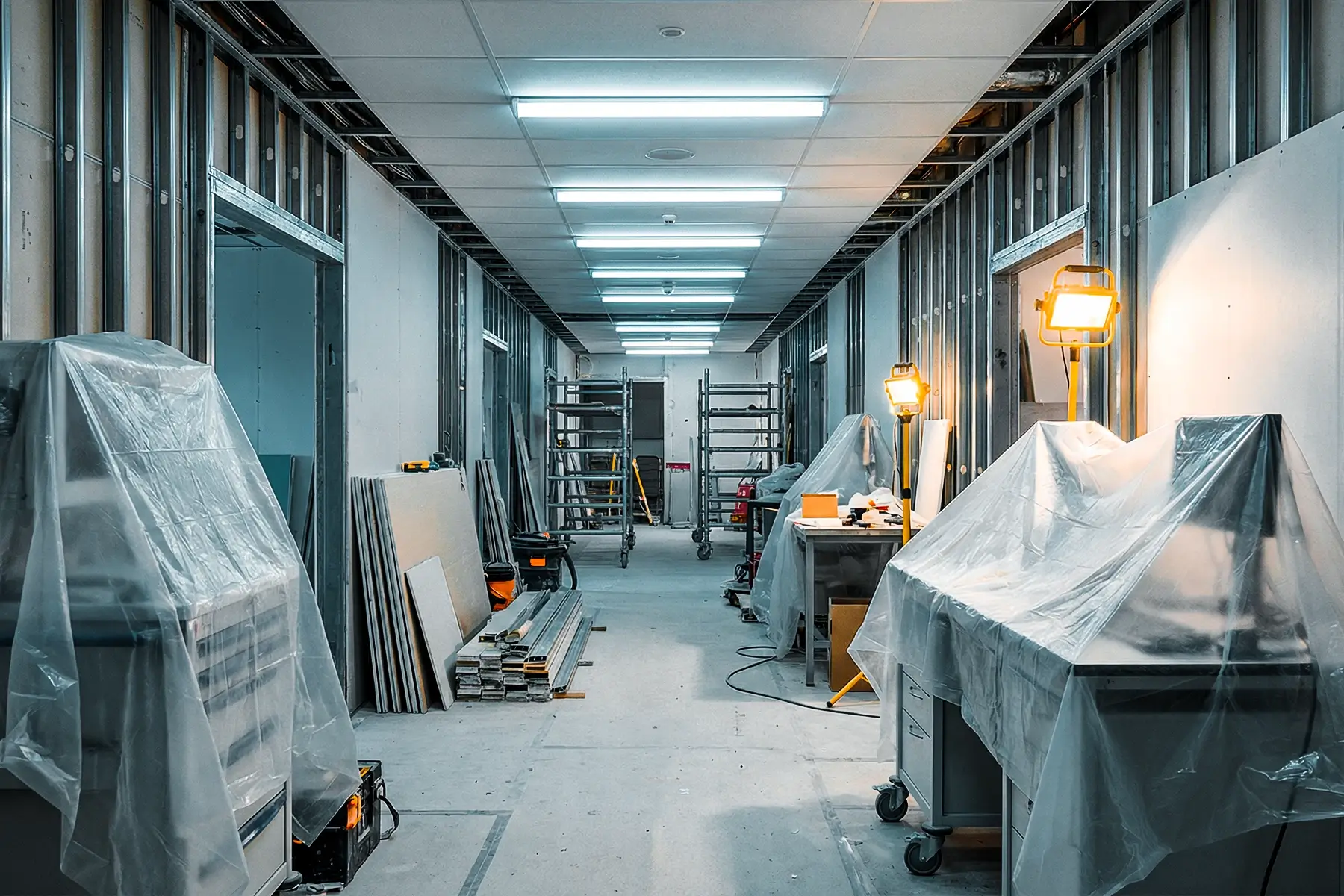
Key Fire Safety Requirements for Renovation
One of the primary obligations ERPs must adhere to concerns evacuation. The renovated layout must support rapid and orderly evacuation in the event of fire or panic, with circulation paths, exits, and protected waiting areas sized and arranged according to the hospital’s capacity. Because hospitals accommodate patients with reduced mobility, exit routes must be fully accessible, and safe-zones must be provided for staged or delayed evacuation.
Lifts are subject to particularly tight controls: their use during a fire is normally prohibited, except under specific conditions for evacuating people with disabilities, and they must meet enhanced safety standards. Passive fire protection is another cornerstone of compliance. Renovation work must rely on fire-resistant materials for walls, partitions, ceilings, floors, and especially fire-doors designed to contain smoke and flames.
Effective compartmentalisation is essential, ensuring that a fire starting in one part of the building cannot rapidly spread to another, a requirement supported by the installation of self-closing fire doors and the creation of fire-resistant zones. Ventilation and smoke-extraction systems, whether natural or mechanical, must also be updated or installed to meet regulatory performance thresholds, guaranteeing that smoke can be controlled and visibility preserved during an emergency.
Beyond passive protection, hospitals must be equipped with an appropriate Système de sécurité incendie (SSI), often at the highest level for ERP “type U.” This system integrates detection, alarms, and safety-management functions and must comply with the applicable AFNOR standards governing installation, operation, and maintenance.
Automatic smoke and heat detectors, supplemented by manual call points, are required, with alarm strategies tailored to alert staff promptly without necessarily disturbing patients. When triggered, the SSI must automatically activate compartmentalization, smoke extraction, escape-route management, and other essential safety actions.
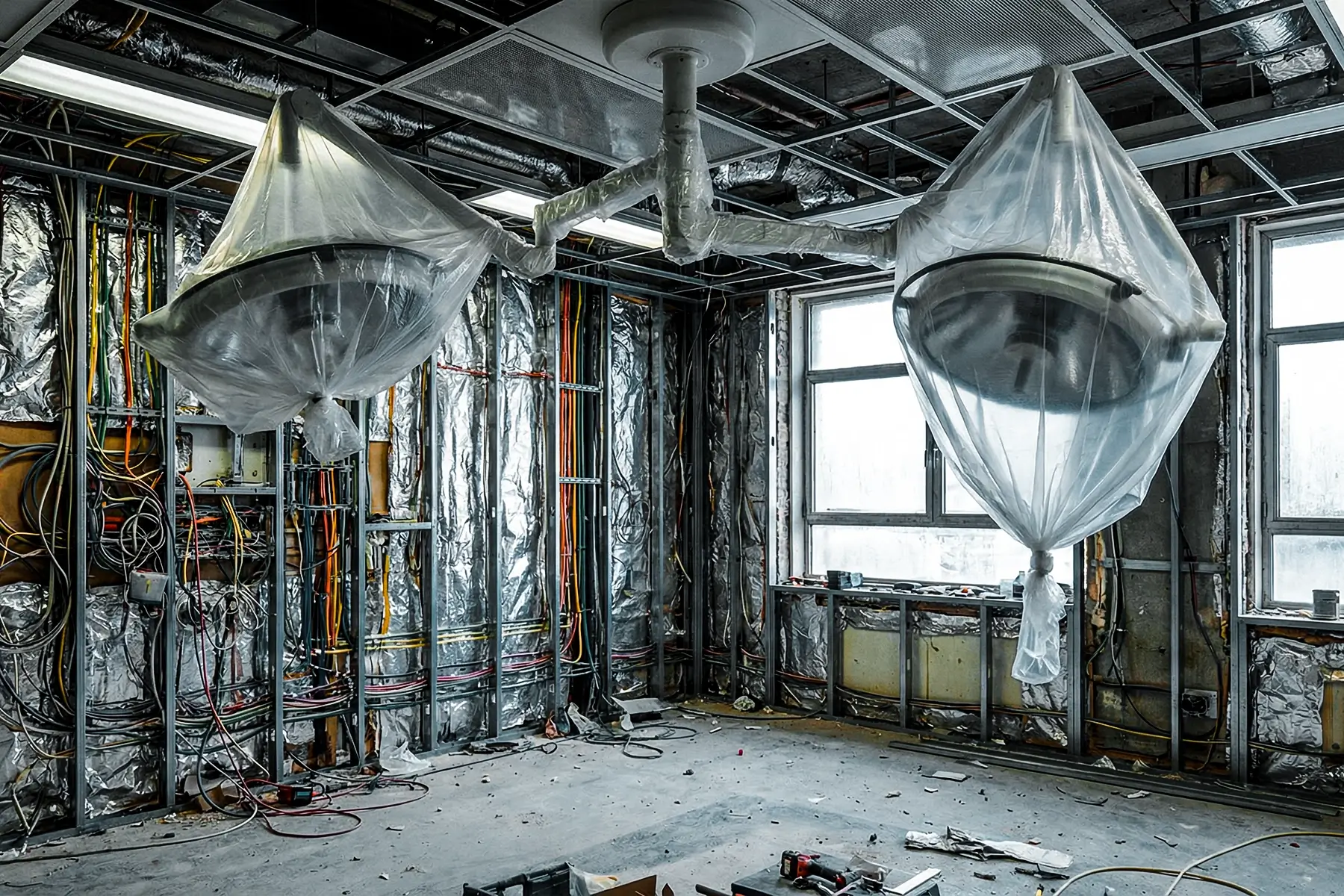
How Wireless Technologies Can Safeguard Renovations
Ramtech is dedicated to guaranteeing fire safety through temporary fire detection systems. The WES and REACT systems, developed by Ramtech, were especially designed to ensure fire protection to environments that cannot rely on a permanent fire alarm system. In 2024, Ramtech’s French team were even awarded the Fire Prevention Award by the French Federation of Firefighting Professions (FFMI). Because of the system’s proven reliability during renovation projects.
“Ramtech’s systems have proven extremely effective during renovation projects. By embracing wireless technology, WES is able to ensure coverage to more precarious environments, thus safeguarding important structures” – Sylvain Castaignau, Head of Business Development for France.
WES and REACT can prove extremely effective, especially within hospitals. Because of their wireless technology, no cabling is required, limiting disruption to medical environments. Furthermore, the WES system is designed for open-air and construction, therefore, its dust-resistant detectors can prevent false alarms. REACT works in tandem with WES as a cloud-based platform that can instantly alert project managers as soon as an alarm goes off.

Ramtech’s systems have proven extremely effective during renovation projects. By embracing wireless technology, WES is able to ensure coverage to more precarious environments, thus safeguarding important structures
Sylvain Castaignau, Head of Business Development for France.
The New Children’s Hospital Case Study in Ireland
Ramtech’s devices have already been tried and tested within a hospital environment in 2019, in Ireland. The New Children’s Hospital project involved the main hospital on the shared campus at St James’s and two paediatric Outpatient and Urgent Care Centres. The scope of the project was large and the risk was high, as the hospital had experienced a number of arson attacks: 15 in a single week.
Fortunately, the WES3 system played a crucial role in ensuring quick detection and safe evacuation during each incident. The attacks could have been extremely dangerous to those working on the project, along with the patients in the adjacent hospital, and without prompt alerts the damage could have been tremendous. The system’s effectiveness has led to plans for increasing the number of WES units on-site, further strengthening fire safety measures.
Needless to say, the implementation of WES3 at the new Children’s Hospital in Ireland has significantly enhanced fire safety on-site, proving its effectiveness during multiple arson incidents. These proactive measures not only have safeguarded the hospital’s construction but also have set a precedent for fire safety standards in large-scale healthcare projects.
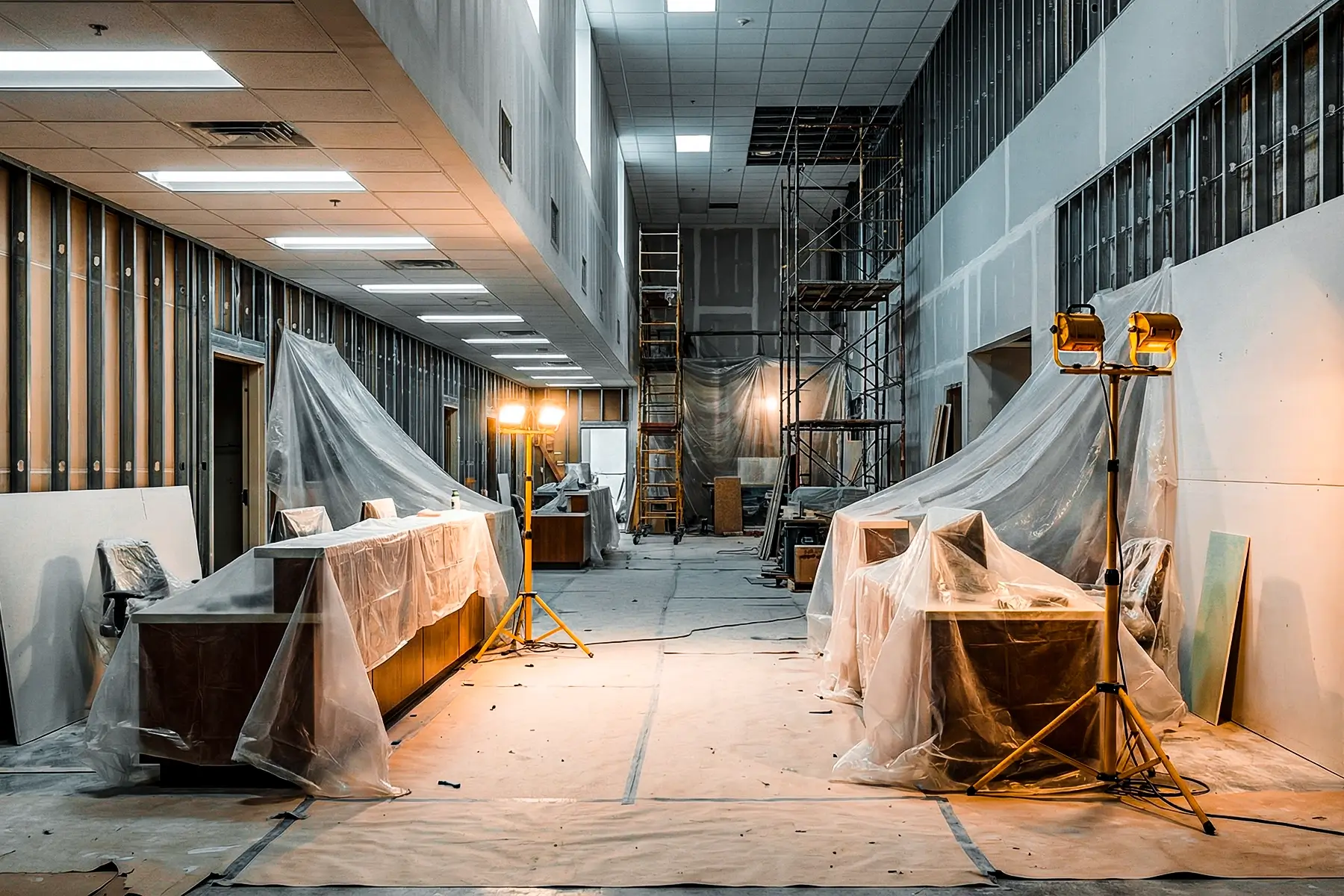
Safeguarding Hospital Renovations is Paramount
In an environment as sensitive and high-risk as a hospital undergoing renovation, maintaining robust fire safety is not simply a regulatory obligation, it is a moral one. The combination of vulnerable patients, complex building layouts, and ongoing construction activity creates conditions in which early detection and rapid response are absolutely essential.
Temporary wireless fire-detection technologies offer precisely that reassurance. Systems such as WES and REACT demonstrate how adaptable, cable-free detection can maintain safety standards even in dynamic, dust-filled, or partially decommissioned environments.
As hospitals across France and beyond continue to modernise their facilities, the role of temporary fire-detection solutions will only grow more significant. By integrating these technologies into renovation planning, healthcare providers can ensure continuity of protection, safeguard both workers and patients, and meet stringent ERP fire-safety requirements. Ultimately, prioritising fire detection during renovations is an investment not just in regulatory compliance, but in preserving lives and guaranteeing the resilience of our most vital public institutions.