




Fire safety during construction presents a different challenge from protecting a completed building. As work progresses, layouts change, fire compartments may be incomplete, permanent detection may not yet be operational and existing fire protection can sometimes need to be temporarily disconnected. At the same time, hot works, temporary electrical installations and combustible materials can introduce additional fire risks.
Denmark’s Building Regulations, BR18, recognise these challenges. Chapter 7, §163 and the accompanying guidance on fire safety and fire protection measures during construction set out how fire safety should be managed while building work is underway, including circumstances where supplementary or temporary measures may be appropriate.

BR18 Covers Construction and Refurbishment
The guidance is not limited to new-build projects. Section 3.0, “Fire safety and fire protection measures”, specifically refers to fires occurring in connection with:
“…nybygninger, ombygninger, renoveringer eller andre former for byggearbejder.” This brings new construction, alterations, renovation and other forms of building work within the scope of the guidance.
BR18 also identifies several factors associated with fires during building work, including electrical installations, hot works, combustible materials and:
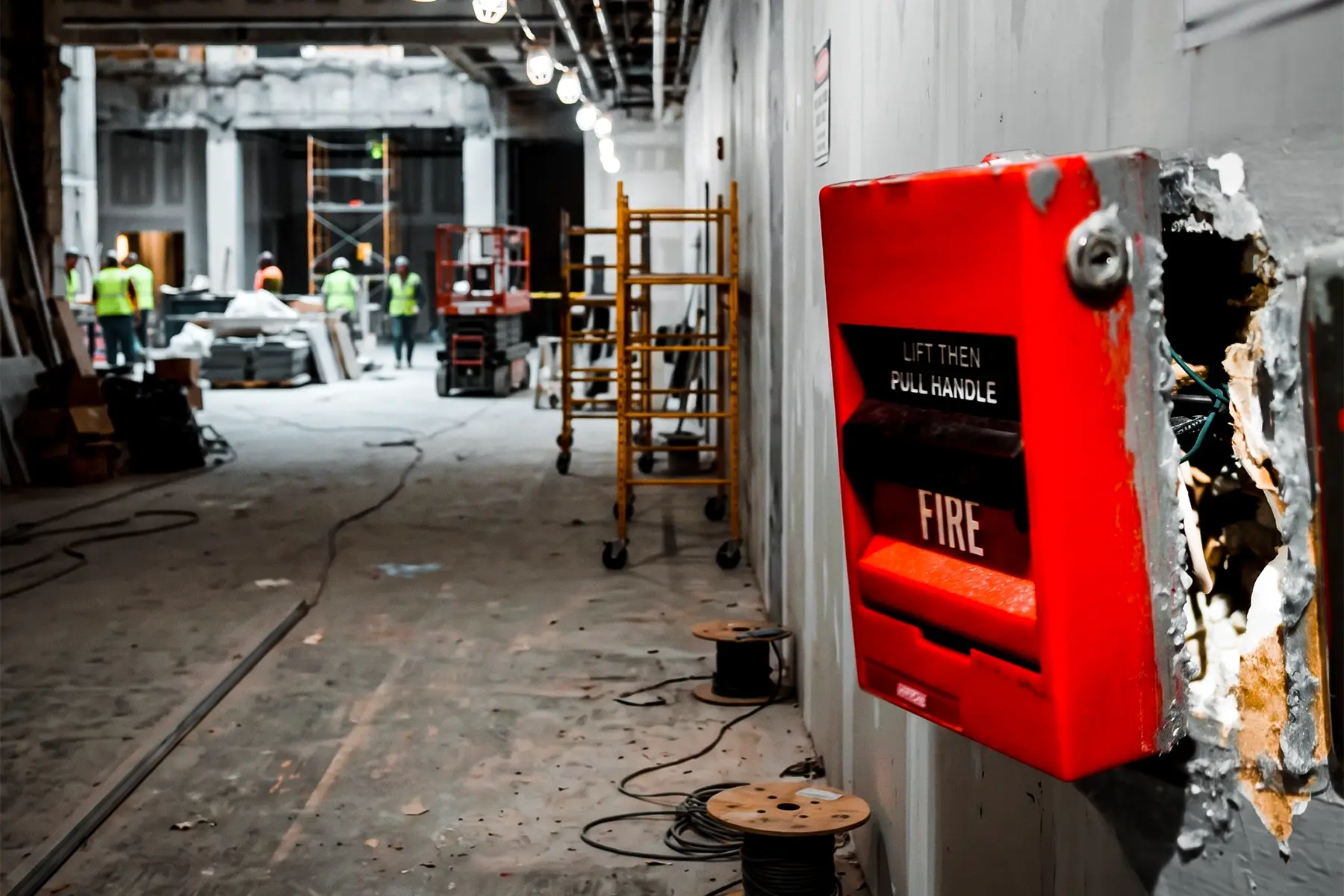
“Manglende brandsikring, pga. ikke færdiggjorte eller udkoblede brandtekniske tiltag.”
This highlights an important challenge for project teams. Fire protection designed for the completed building may not yet be available at every stage of construction, while refurbishment work can temporarily affect systems already in place. BR18 therefore recognises that supplementary measures, including alternative or temporary fire protection measures, may need to be introduced during the construction period.
When Temporary Fire Protection May be Needed
BR18 recognises that supplementary measures may be required during the construction period. The guidance states:
“Der kan i byggeperioden eventuelt indarbejdes supplerende tiltag…”
These measures can include temporary technical installations, fire watches, additional firefighting equipment and other temporary fire protection measures.
Section 3.5 of the guidance becomes even more relevant when considering fire detection. In circumstances involving particular risks or significant fire danger, or where an existing automatic fire alarm system is disconnected, BR18 states:
“…bør der indsættes brandvagt eller opsættes midlertidigt automatisk brandalarmanlæg.” The guidance therefore specifically identifies a fire watch or temporary automatic fire alarm system as potential measures in these circumstances. BR18 also recognises the importance of warning people working on the construction site and notes that a temporary warning system may be appropriate.
Refurbishment Creates an Additional Challenge
The issue becomes particularly important when refurbishment or renovation takes place in a building that remains wholly or partially in use. BR18 states: “…må den samlede brandsikkerhed i bygningen ikke forringes.” For contractors, this means considering how fire safety will be maintained when existing systems or other fire protection measures are affected by the work.
Rather than waiting until an existing system needs to be taken offline, temporary fire protection can be considered earlier in the project. This allows teams to identify potential gaps in detection and warning and determine how protection will be maintained as the work progresses.
Planning For a Changing Environment
Construction sites do not remain static. Work areas move, layouts change, different trades enter and leave the project and permanent systems may become operational in stages.
The fire protection arrangements appropriate at one stage of a project may therefore need to change at another. For electrical contractors, this creates an important question to discuss with customers: if permanent fire detection and warning are not available at every stage of the project, how will appropriate protection be maintained in the meantime?
How WES Can Support Temporary Fire Protection
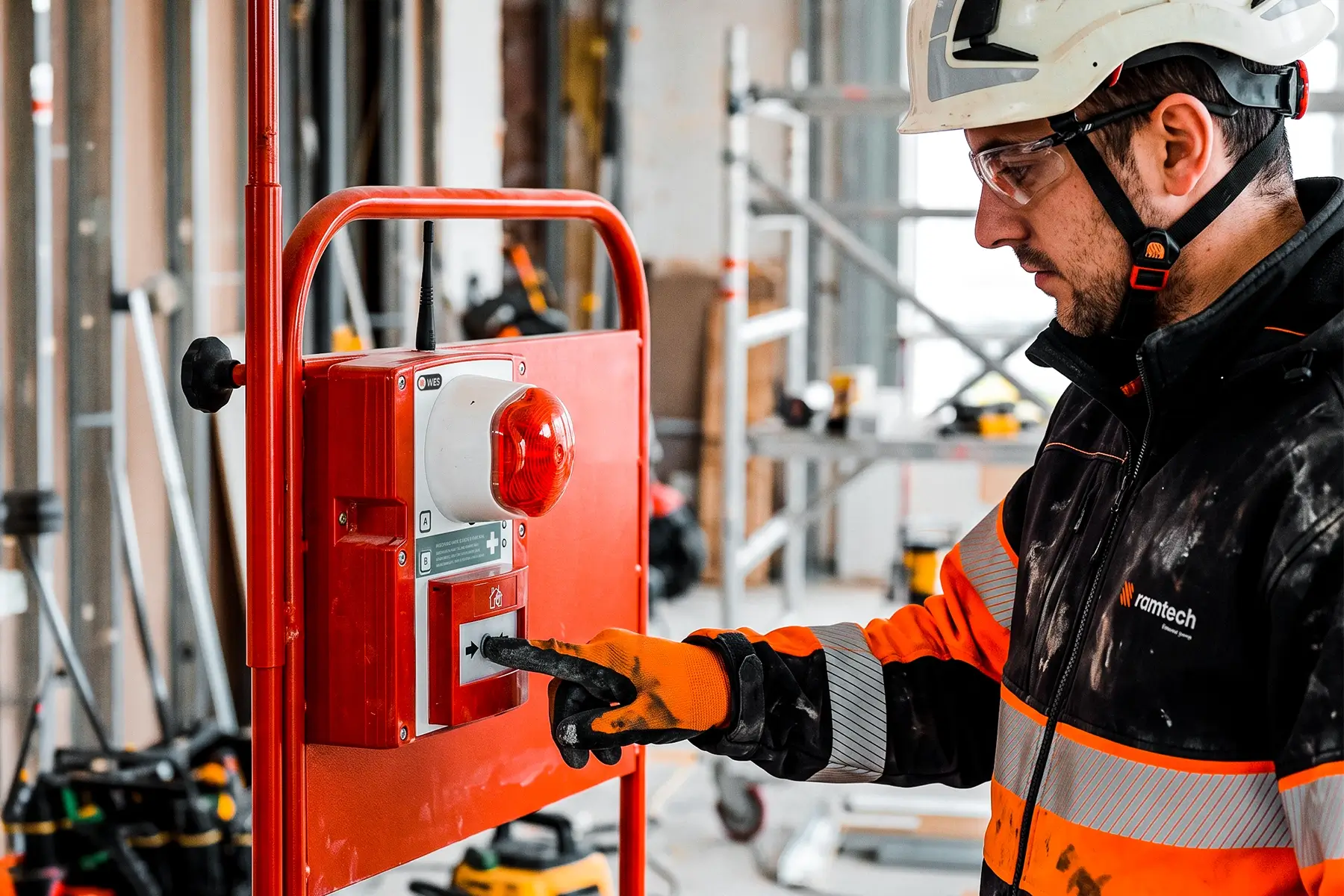
Where a project requires temporary fire detection and evacuation, Ramtech’s WES provides a fully wireless, battery-powered solution designed specifically for temporary and changing environments. With no fire alarm cabling or reliance on site power, WES can be rapidly deployed and then relocated or expanded as work areas, layouts and risks change. The system combines wireless manual call points with audible and visual alerts, smoke and heat detection and interface technology, providing detection and warning across the project.
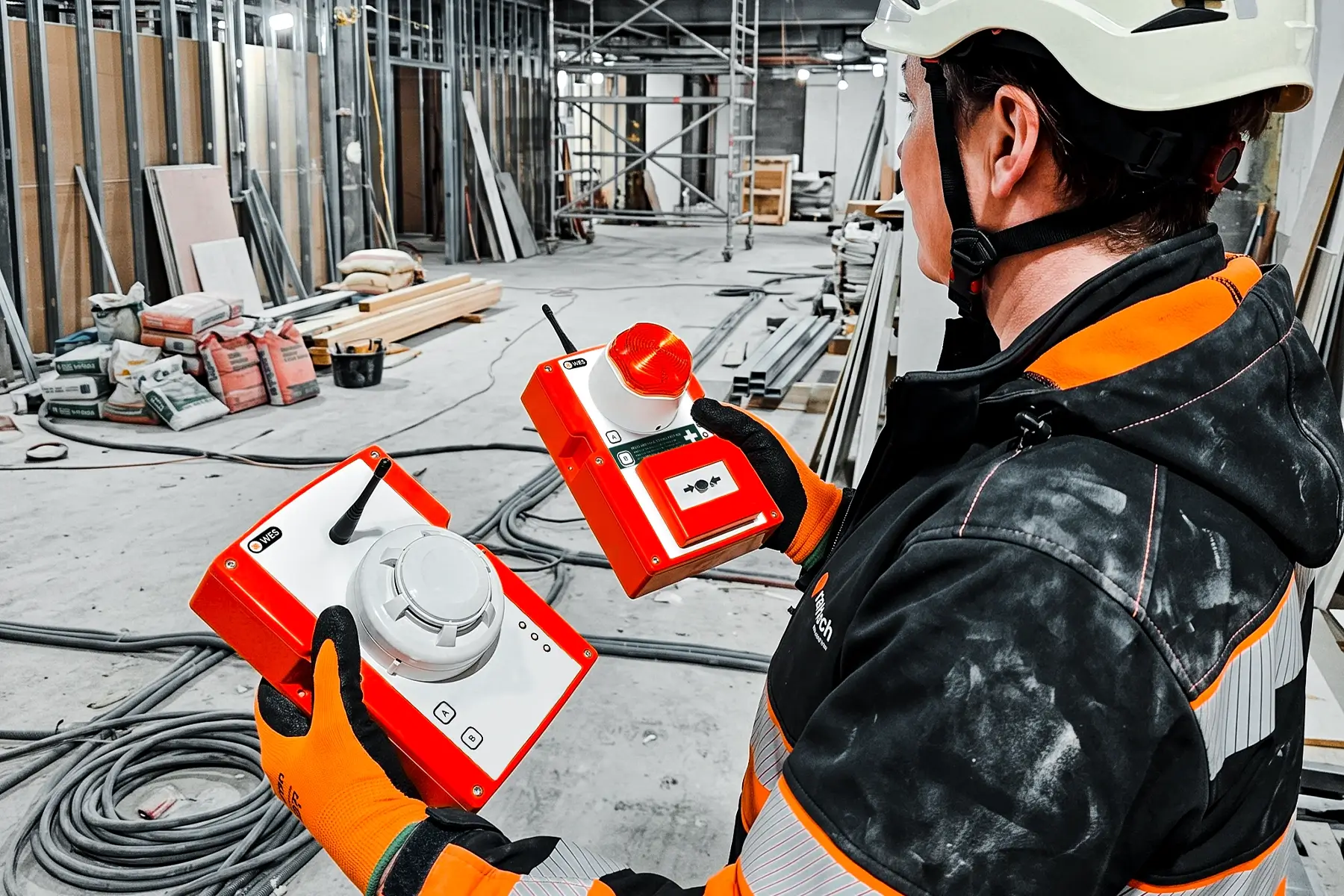
This flexibility makes WES particularly suited to new construction, where permanent fire protection may not yet be operational, and refurbishment and renovation, where existing systems may need to be isolated or temporarily taken out of service during the works. WES can also be combined with REACT, Ramtech’s cloud-based emergency notification platform. Fire, medical, fault and maintenance events can be sent directly to authorised users through the REACT mobile app, extending visibility beyond the immediate site and helping teams stay informed wherever they are.
Together, WES and REACT provide a flexible approach to temporary fire protection that can adapt alongside the project as work progresses.