




Europe’s data centre market is expanding rapidly as demand for cloud services, digital infrastructure and AI continues to grow. But as facilities become larger and increasingly reliant on lithium-ion battery systems, fire safety strategies need to evolve alongside them, says Aaron Velardi, head of business development at Ramtech.
The European data centre market is entering a period of significant growth, with new facilities and larger campuses like CyrusOne’s FRA7 campus in Frankfurt or Vantage’s London I campus being developed to meet rising demand for digital infrastructure.
The growth of the sector is also creating demand for supporting infrastructure, with an additional 780,000 sq m of logistics space expected to be required over the next three years across Europe’s five major data centre markets: Frankfurt, London, Amsterdam, Paris and Dublin, collectively known as FLAP-D.
However, as they increase in scale, they are also becoming more energy-intensive and complex.
Higher power densities, increasingly sophisticated infrastructure and the need to maintain uninterrupted service are placing greater emphasis on the resilience of the systems supporting them, including the batteries that provide backup power.
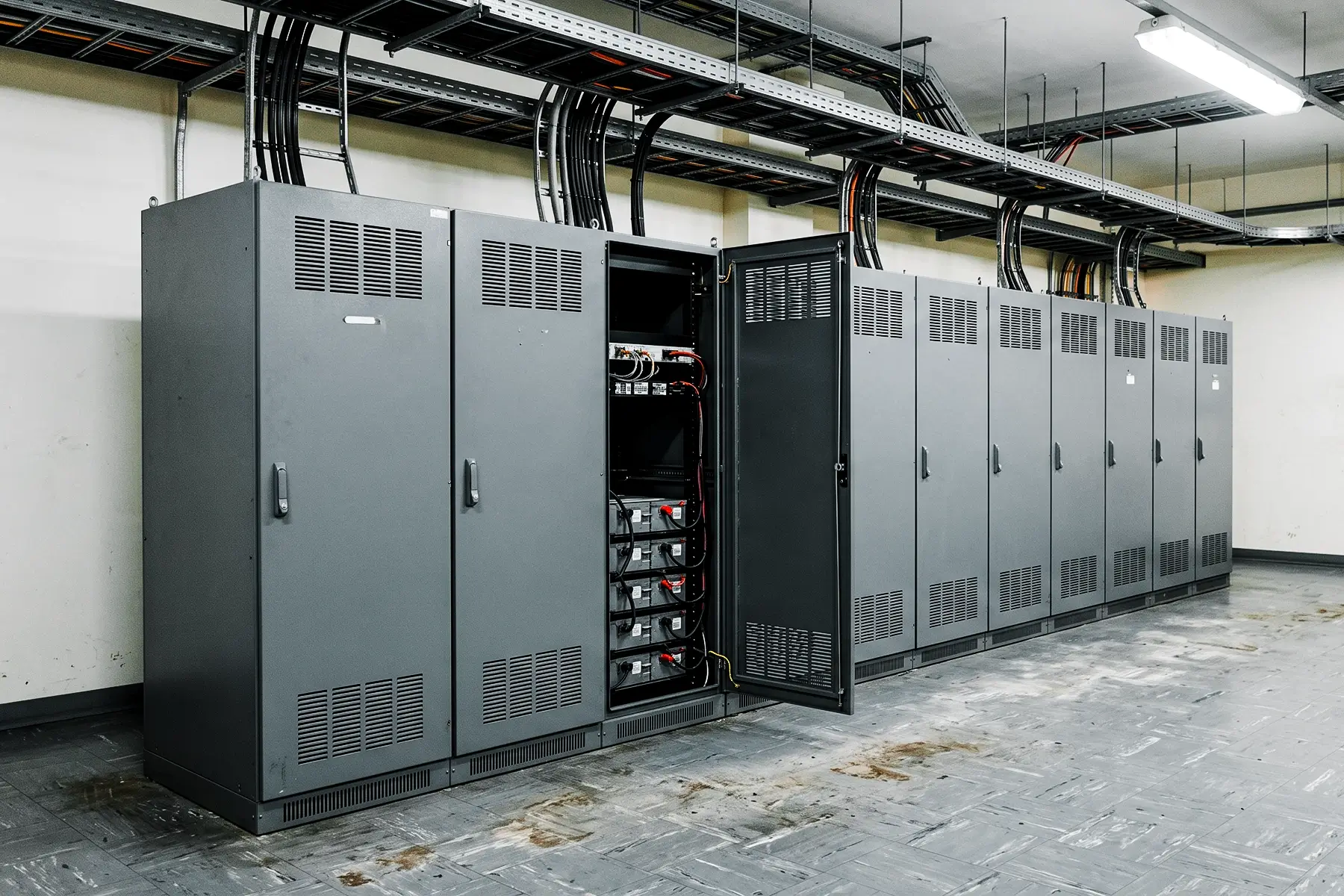
Lithium-ion batteries are increasingly being used within uninterruptible power supply (UPS) systems, while they are also commonplace across construction sites in tools, equipment and temporary power applications.
From a fire safety perspective, this is an area that deserves greater attention. The risks associated with lithium-ion technology are not unique to data centres, but their increasing use within large-scale digital infrastructure creates particular considerations for developers, contractors and operators.
The Risk Begins Before a Data Centre Goes Live
Fire safety discussions around data centres often focus on operational facilities, but construction can present its own challenges.
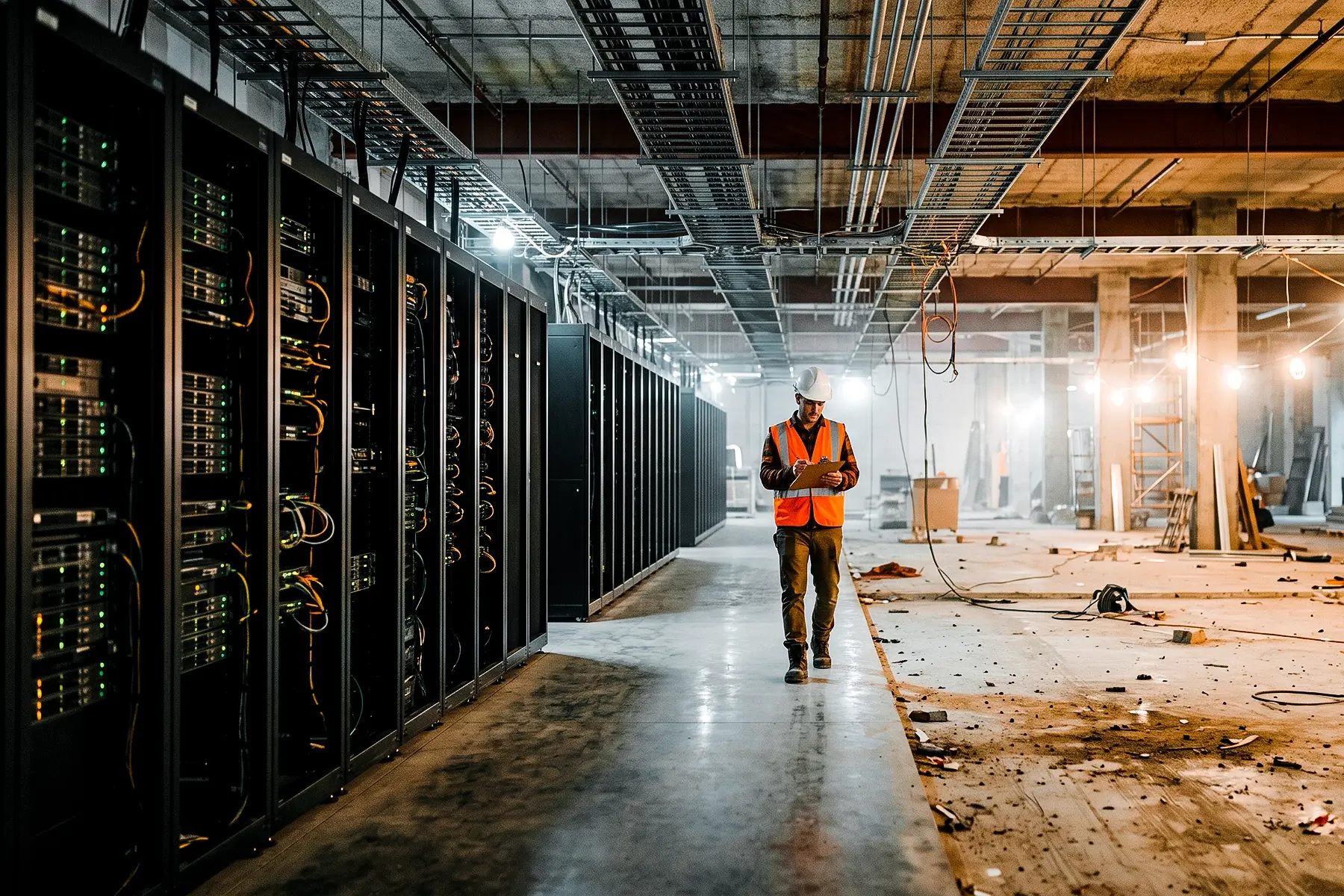
A major data centre may take years to complete, with different parts of a campus at different stages of development. Permanent systems may be installed while other areas remain active construction zones, creating an environment where temporary equipment, contractors, materials and live infrastructure are all operating alongside one another.
This means lithium-ion battery-related fire risks can emerge well before a data centre reaches its final operating configuration. Fire prevention therefore needs to be considered throughout the construction programme, rather than treated as a final-stage requirement.
Why Lithium-Ion Fires Are Different
The growing use of lithium-ion batteries is significant because the technology behaves differently from many traditional fire risks. A key concern is thermal runaway, which can occur when a battery cell is damaged, overheated or defective.
The resulting chain reaction can generate intense heat and release flammable gases, potentially allowing the problem to spread rapidly between cells. Once thermal runaway has begun, the window for intervention can become much smaller.
UK Government guidance on electrical energy storage systems identifies thermal runaway as a significant battery failure mode and highlights associated risks including fire, explosion and the release of hazardous gases.
For project teams, simply applying traditional approaches to a new technology may not provide sufficient protection. Battery chemistry, system design, location, scale and operating conditions all need to be considered when assessing the appropriate approach.
Detection Needs to Move at the Speed of the Project
One of the biggest challenges during construction is maintaining effective fire detection as the site changes. Data centre projects are rarely static and a detection system that works effectively at one stage may not provide the same coverage months later.
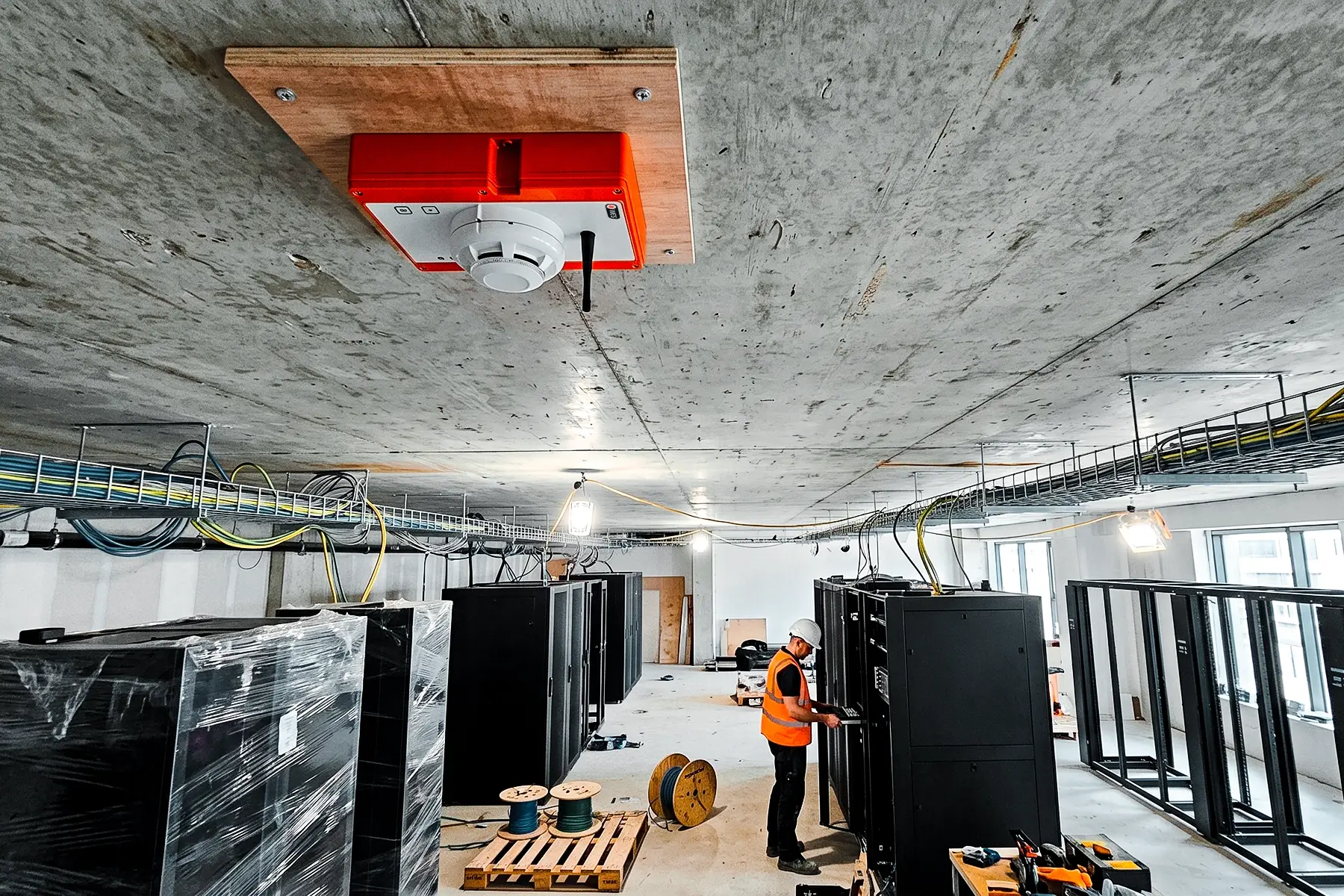
Wireless fire detection systems can be deployed without the same reliance on permanent cabling, making them easier to install, relocate and expand as construction progresses. This flexibility can be particularly valuable across large data centre campuses, where construction activity can continue alongside completed or partially operational areas.
Real-time monitoring and automated alerts can also give project teams greater visibility across a large site. Rather than relying solely on scheduled inspections or personnel physically monitoring an area, teams can receive alerts when an issue occurs and maintain an auditable record of incidents and responses.
Lessons from Larger-Scale Construction Projects
There are already practical examples of how a more flexible approach to fire safety can work on large-scale construction projects, including in North America, where major infrastructure projects are being delivered at significant scale. On one 3.2 million-square-foot North American fulfilment centre project I worked on, more than 700 wireless fire safety devices were deployed across the site, allowing fire protection to adapt as construction progressed while reducing the need for extensive cabling and manual fire watch arrangements.
Over a 60-day period, this approach generated approximately $500,000 in net savings for the project. While the financial outcome was project-specific, the wider principle is relevant to increasingly complex construction projects across the UK and Europe. However, it is important to recognise that the UK and Europe have their own regulatory frameworks and project requirements. In England, the Regulatory Reform (Fire Safety) Order 2005 sets out duties around fire risk assessment and appropriate fire safety arrangements, while Approved Document B provides statutory guidance on fire safety. For data centre infrastructure, the BS EN 50600 series provides a framework for the design and operation of data centre facilities across Europe.
These frameworks provide an important foundation, but compliance alone cannot account for every variable. Since battery systems and construction conditions can change throughout a project, fire safety needs to be integrated from the outset and reviewed as the project develops.
Building Fire Safety into the Next Generation of Data Centres
Europe’s data centre market is continuing to expand, driven by demand for AI, cloud services and digital infrastructure. As projects become larger and more complex, fire safety needs to remain an important consideration throughout their development.
By considering fire safety from the outset and reviewing risks as projects progress, developers and contractors can ensure their approach remains appropriate as the construction and operating environment evolves.