




The recent fire at the Maxi Dolphin shipyard in Erbusco, northern Italy, has understandably attracted attention across the marine industry. A major production building was destroyed, together with three yachts inside, including an MD80 sailing yacht that was reportedly nearing completion. Around 20 fire crews responded to the incident and worked through the night to contain the blaze, successfully preventing it from spreading to an adjacent production building. Most importantly, no injuries or fatalities have been reported.
The cause of the fire has not yet been established and investigations are ongoing. It would therefore be inappropriate to speculate about how the fire started, what protection measures were in place or whether anything could have changed the outcome. However, incidents of this scale inevitably encourage the wider industry to reflect on the challenges of managing fire risk during shipbuilding, repair and refit.
Maxi Dolphin is also not an isolated example. In 2018, a major fire broke out at Lürssen’s Bremen shipyard, affecting a floating dock and a yacht under construction. In 2022, a fire at Ferretti Yachts’ Cattolica facility destroyed a 30-metre yacht reportedly nearing completion and damaged two others. More recently, in 2024, a fire aboard the yacht Flagship while inside a Miami shipyard building resulted in the vessel being declared a $5 million total loss. The circumstances surrounding each incident are different and no direct comparisons should be made. Collectively, however, they reinforce a broader question for the industry: are our approaches to fire protection evolving as quickly as the environments they are designed to protect?
Fire Risk Doesn't Stand Still
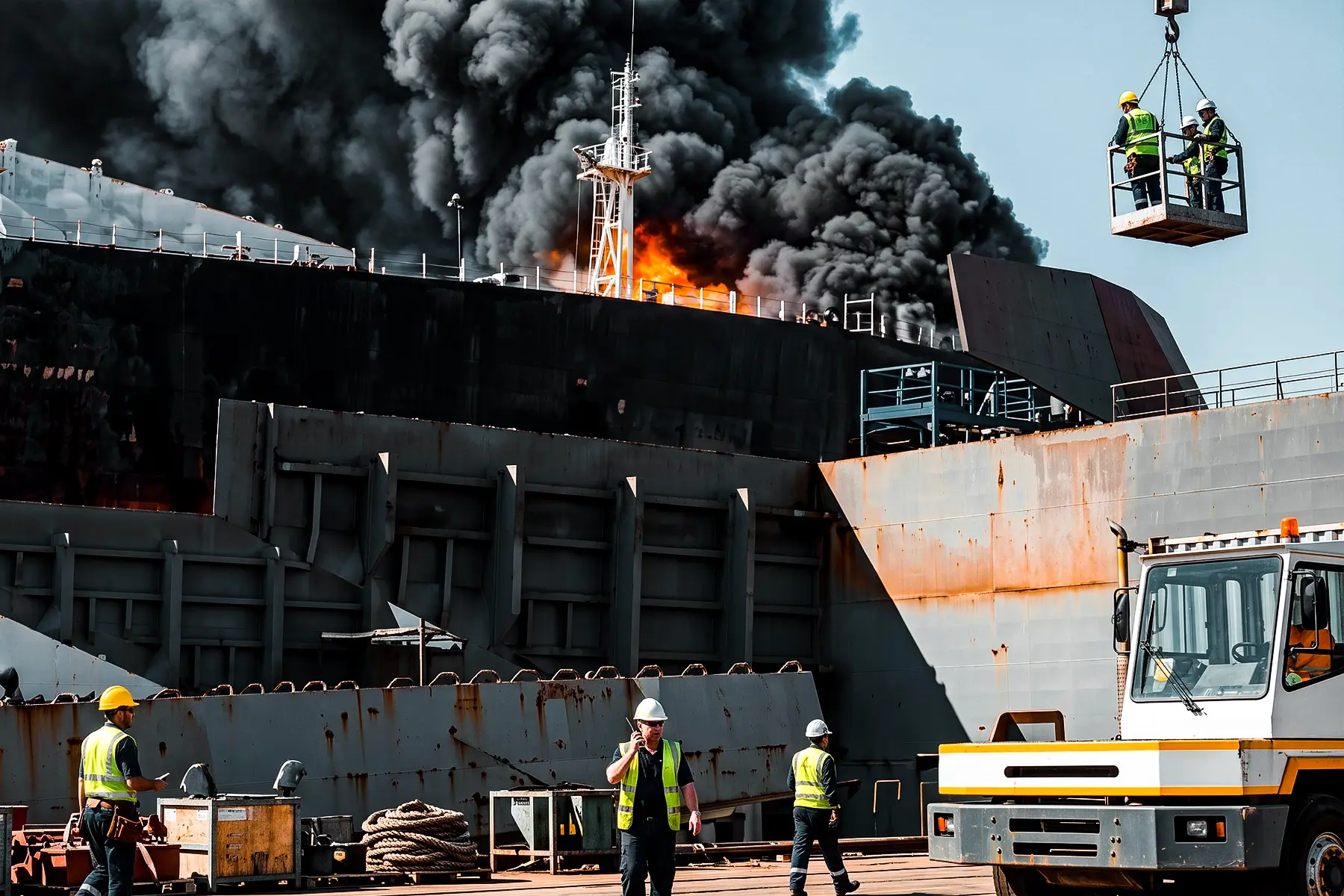
A shipyard is rarely a static environment. As a vessel progresses through construction or refit, its layout, workforce and risk profile can change significantly. Open structures become enclosed compartments, contractors move between areas, temporary power is introduced, materials are relocated and activities such as welding and cutting can take place alongside electrical installation, painting and interior fit-out.
The fire risk profile that existed several weeks earlier may therefore look very different today. The challenge is ensuring the fire protection strategy evolves at the same pace.
This becomes particularly important when permanent fire detection and alarm systems have not yet been installed, commissioned or are temporarily taken out of service during repair or refit. A vessel can therefore be increasing in complexity and value at a time when its permanent fire detection and alarm system is not yet providing full coverage.
That creates an important question for shipyards: what detection is in place during that gap? If the permanent system is not yet available, teams still need to consider how an incident would be identified and the alarm raised as early as possible.
For project teams, the question should therefore be broader than what protection the finished vessel will have. How is the changing risk being managed at every stage of getting there?
There can be a real focus on the fire protection a vessel will have once it’s complete, but we also need to be asking what’s in place while it’s being built or refitted. The risk doesn’t wait for the permanent system to be ready. As the vessel develops and the environment changes, we need to make sure there isn’t a gap in how a fire would be detected and communicated.
Justyna Seed, Senior - Business Development Manager Europe, Ramtech
Early Detection Is About Buying Time
Whatever the environment, the earlier an incident is identified, the sooner an appropriate response can begin.
The Maxi Dolphin fire was reported to have broken out at approximately 22:00. This tells us nothing about when it was first detected or the systems and procedures in place, and no assumptions should be made about either.
It does, however, raise a relevant question for the wider industry about what happens outside normal working hours, when fewer people may be present to identify the early signs of an incident.
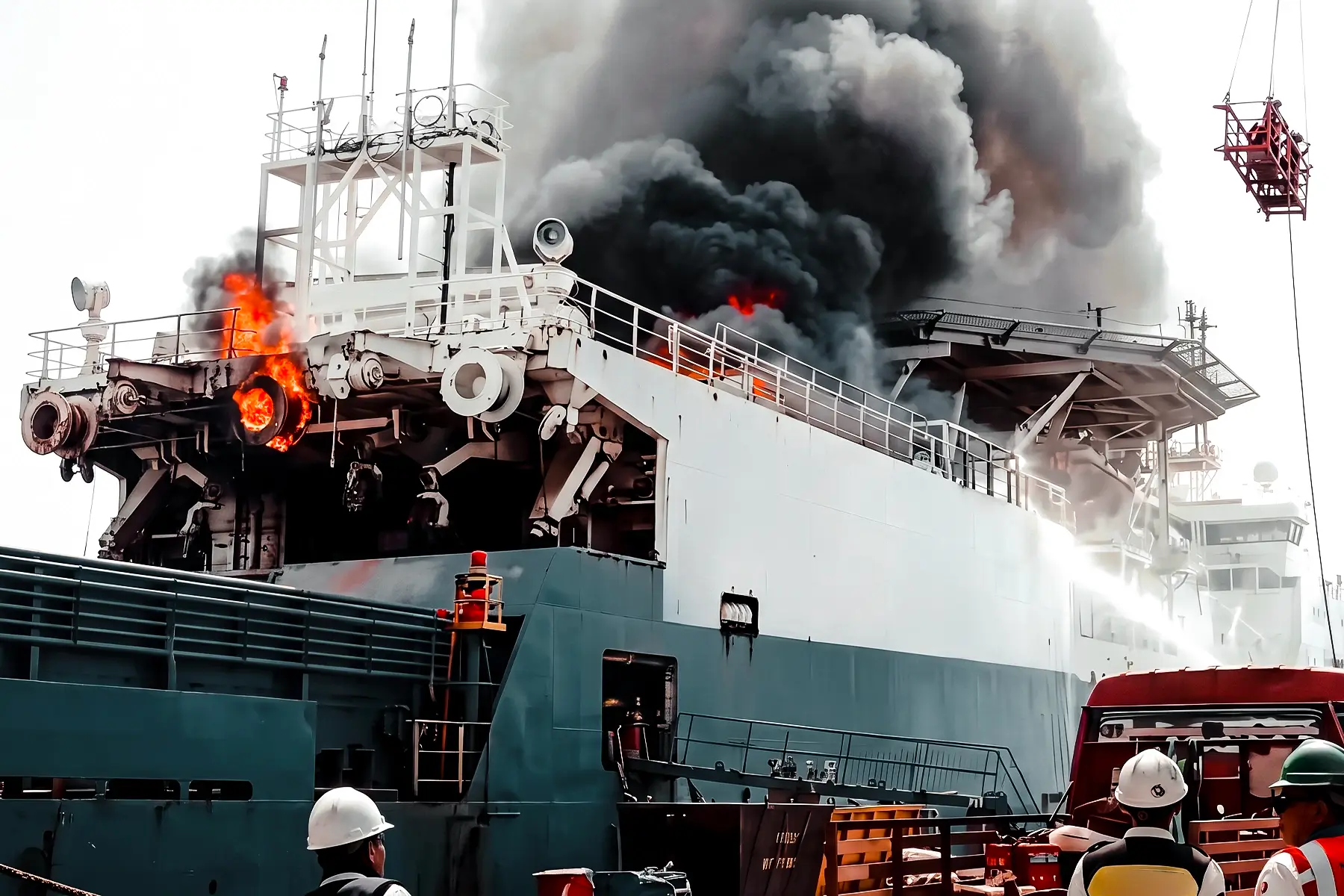
If a fire developed in a vessel, workshop or production area late at night, what would detect it? How quickly would the right people know, and would they know exactly where attention was required? These may sound like simple questions, but they test something fundamental: whether the fire strategy works not just on paper, but in the changing reality of a shipyard environment.
A Question Worth Asking
The cause of the Maxi Dolphin fire remains under investigation, and it would be wrong to draw conclusions about what happened or what could have changed the outcome. But incidents like this do provide an opportunity for the wider industry to look at its own approach to fire risk.
“There can be a real focus on the fire protection a vessel will have once it’s complete, but we also need to be asking what’s in place while it’s being built or refitted. The risk doesn’t wait for the permanent system to be ready. As the vessel develops and the environment changes, we need to make sure there isn’t a gap in how a fire would be detected and communicated.” – Justyna Seed, Senior Business Development Manager – Europe, Ramtech
For shipyards, builders and repair facilities, perhaps the most useful question isn’t what happened at Maxi Dolphin, but what would happen within their own facility: if a fire started tonight, what would detect it, how quickly would the right people know, and how prepared would the site be to respond?
It is a question worth answering before an incident puts the strategy to the test.