



NEWS
The System Impairment Gap
The blind spot underwriting still cannot see
Marine insurers continue to record significant shipyard fire losses, with high severity maintenance, repair and operations (MRO) incidents exposing weaknesses when vessels’ permanent fire detection systems are offline. Aron Wadhia, head of business development at Ramtech, argues that shipyard safety and underwriting practices need to better account for these transient exposure periods.
With fire and explosion accounting for 16% of total vessel losses over the past decade and fire remaining the second largest cause of total vessel loss globally, marine insurers are continuing to absorb significant costs. Over the same period, 109 vessels have been lost to fire, while 250 fire incidents were recorded in 2024 alone – up 20% year on year and the highest total for a decade. Despite these figures, shipyards continue to be an overlooked source of exposure, even as loss ratios across marine insurance remain elevated at 70 to 80%, leaving limited margin for major fire related claims.
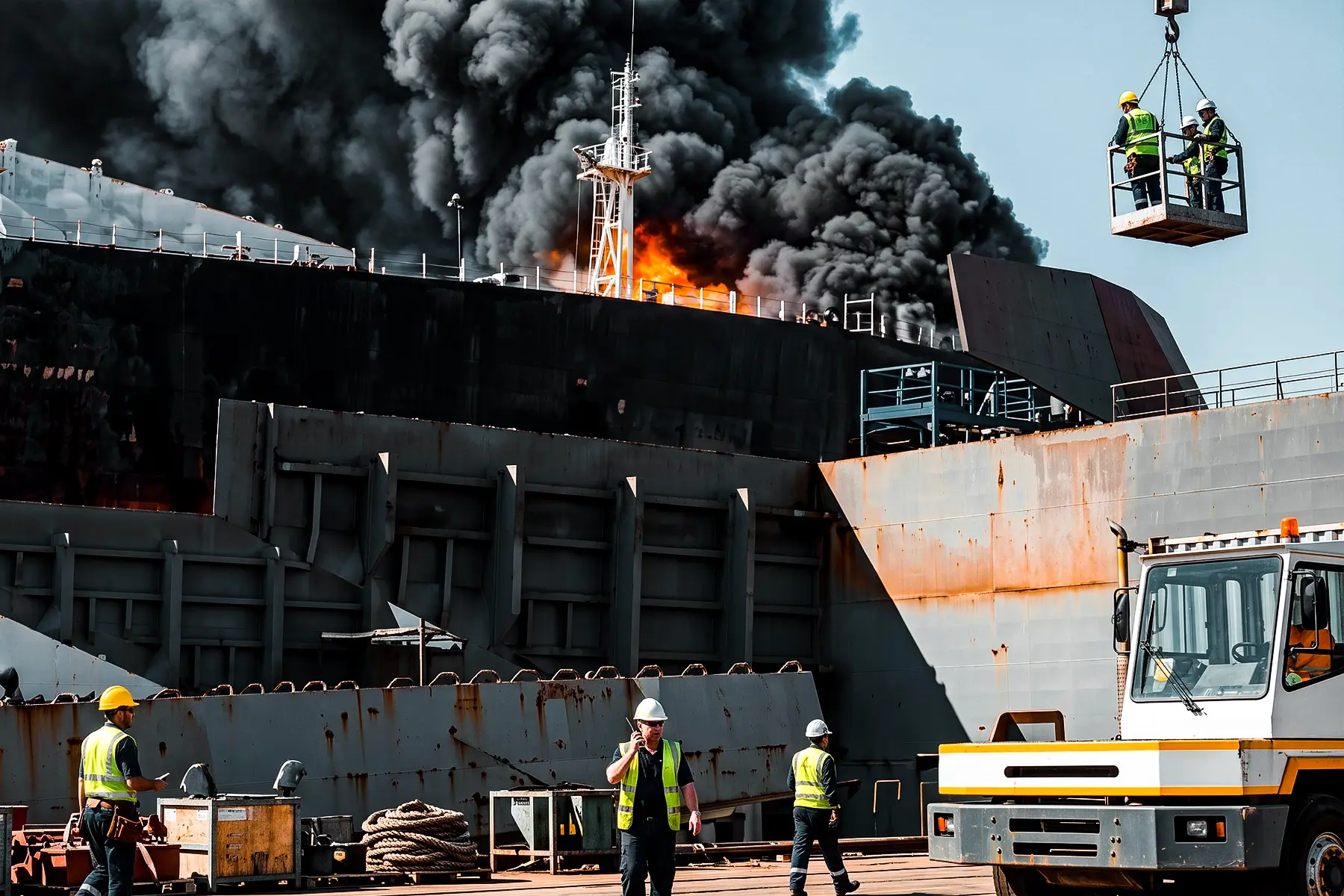
At the centre of this problem is a structural blind spot that persists across global maritime MRO and newbuild environments: the system impairment gap. This is the critical window when a vessel’s permanent fire detection and suppression systems are offline during construction, repair or maintenance, while high risk hot works continue. In practice, this creates a temporary but extreme elevation in exposure that is not consistently captured by underwriting models or compliance documentation.
Recent incidents across global shipyards highlight the severity of this exposure. For example, a fire at Vijay Marine Shipyard in Goa in October 2025 resulted in four fatalities during vessel construction when permanent fire protection systems were not fully operational. Additionally, shipyard fires during maintenance operations at ASL Marine’s Batam yard led to 13 fatalities and 18 injuries, marking the second major fire at the site within five months. More recently, an incident at May Ship Repair in Staten Island in May 2026 required more than 200 emergency responders, resulting in one fatality and over 30 injuries, including firefighters.
The JH143 Limitation and the Volatility of Operational Reality
JH143, a standardised Shipyard Risk Assessment framework used in the maritime and insurance industries, emerged in response to significant historical loss activity in the early 2000s and remains a key reference point for shipyard risk engineering today.
It provides a structured approach to assessing fire protection, emergency response and operational procedures. However, its core limitation lies in its static nature. On the other hand, shipyard environments are not static.
In both new construction and MRO contexts, risk fluctuates depending on phase, contractor activity and system availability. The most dangerous periods are often short, transitional and operationally routine, particularly during hot work and the critical hours that follow.
Evidence consistently shows that the highest consequence events frequently occur outside active hot work itself, during the post activity phase when fire watch reliance is highest and human monitoring fatigue is most likely.
This is precisely the window where traditional frameworks like JH143 offer limited visibility, even though exposure is at its peak. The implication is clear. Snapshot audits and periodic inspections cannot adequately represent volatile impairment windows. For insurers, this creates a structural information gap at the exact point where risk is most likely to crystallise into loss.
Risk is no longer a fixed state documented at inspection but a dynamic condition that evolves minute by minute within the shipyard environment.
From Passive to Active Underwriting Through Continuous Monitoring
As a result, a growing number of insurers and surveyors are beginning to recognise that the solution is not simply tighter procedural compliance but improved visibility during impairment periods. This is driving interest in approaches that can support oversight across complex shipyard environments, particularly where exposure shifts between project phases.
Rather than relying solely on static infrastructure or human fire watch, these control measures, including temporary fire detection systems, temporary fire alarm systems and evacuation alerting or emergency notification technologies, are designed to complement existing protections by improving coverage across changing site conditions.
They can be deployed and repositioned in line with active work fronts and operate independently of a vessel’s permanent fire protection systems. In doing so, they help address the visibility gap that emerges during system shutdown and recommissioning, when exposure is typically at its highest but oversight is most limited.
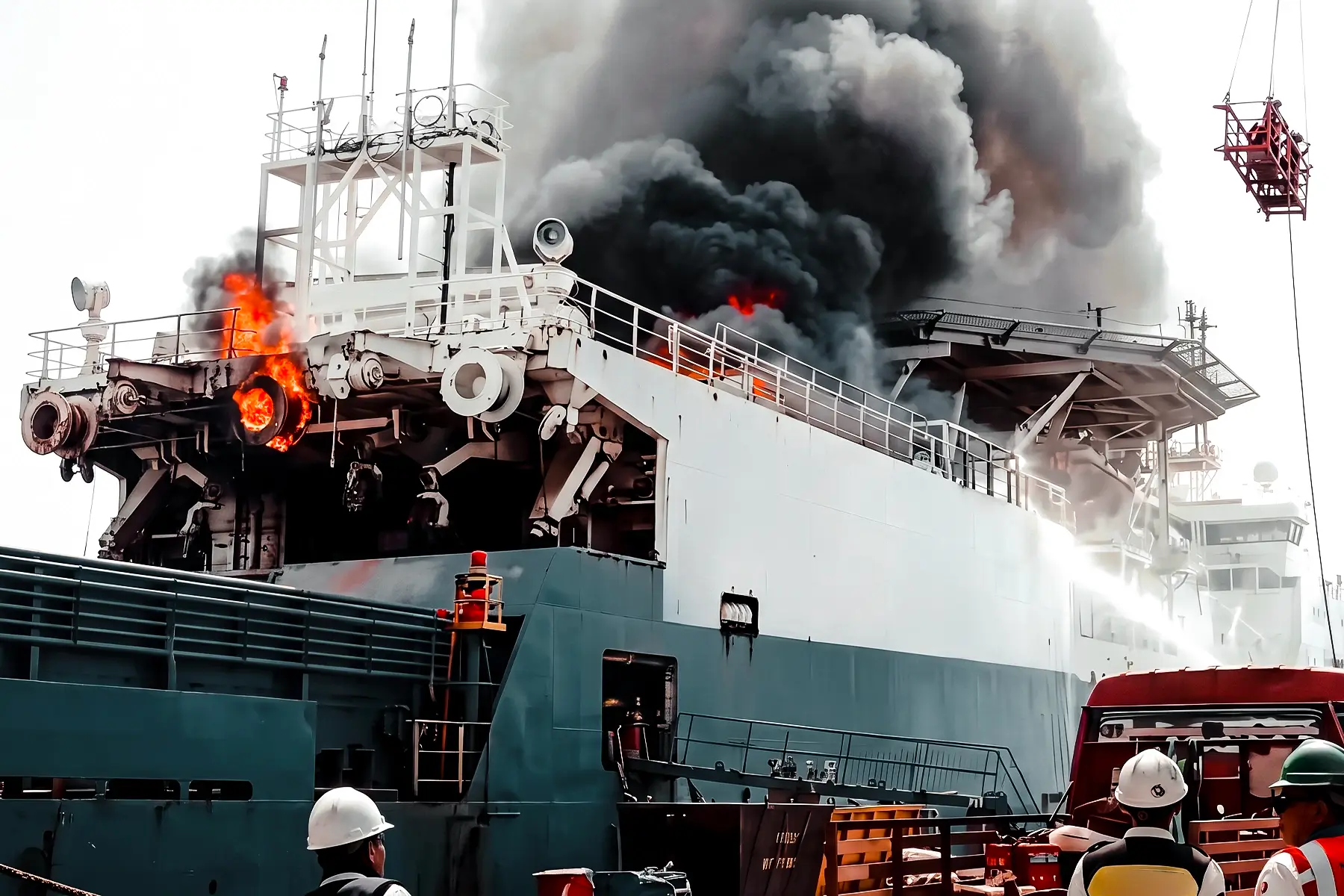
At a naval shipyard, I have seen situations where hot works involving welding and metal cutting were reportedly carried out on board a naval vessel without the appropriate permit. During the operation, workers cut through the hull, igniting materials on the opposite side and triggering a fire. A temporary detection system activated and enabled a response, preventing escalation and potentially significant vessel damage.
From an underwriting perspective, the significance extends beyond detection to how risk is understood during impairment windows. Continuous monitoring introduces the potential for improved visibility during the most exposed phases of work. Over time, this supports more responsive underwriting approaches, where risk is assessed not only at the point of policy inception but reflected more consistently throughout high-risk operational cycles.
This aligns closely with the direction many insurers are already moving towards, where behavioural indicators, system usage patterns and operational data increasingly inform risk selection and pricing. As deployment data from environments such as shipyards expands, previously less visible exposure can be translated into more measurable and actionable insight.
Closing the gap between compliance and reality
The core challenge facing marine insurers is not the absence of regulation or guidance. It is the mismatch between compliance frameworks and operational reality during short duration, high consequence impairment windows. As loss activity in maritime MRO environments continues to attract attention, the industry is reaching a point where static assurance is no longer sufficient. Closing the system impairment gap requires a shift towards continuous visibility, where temporary but critical risk phases are actively monitored rather than retrospectively assessed.
For underwriters, this represents a shift in mindset as much as technology. Risk is no longer a fixed state documented at inspection but a dynamic condition that evolves minute by minute within the shipyard environment. Temporary fire detection and emergency notification systems can play a key role in this shift by providing continuous monitoring and alerts during impairment periods, helping to bridge the gap between compliance expectations and operational reality.