



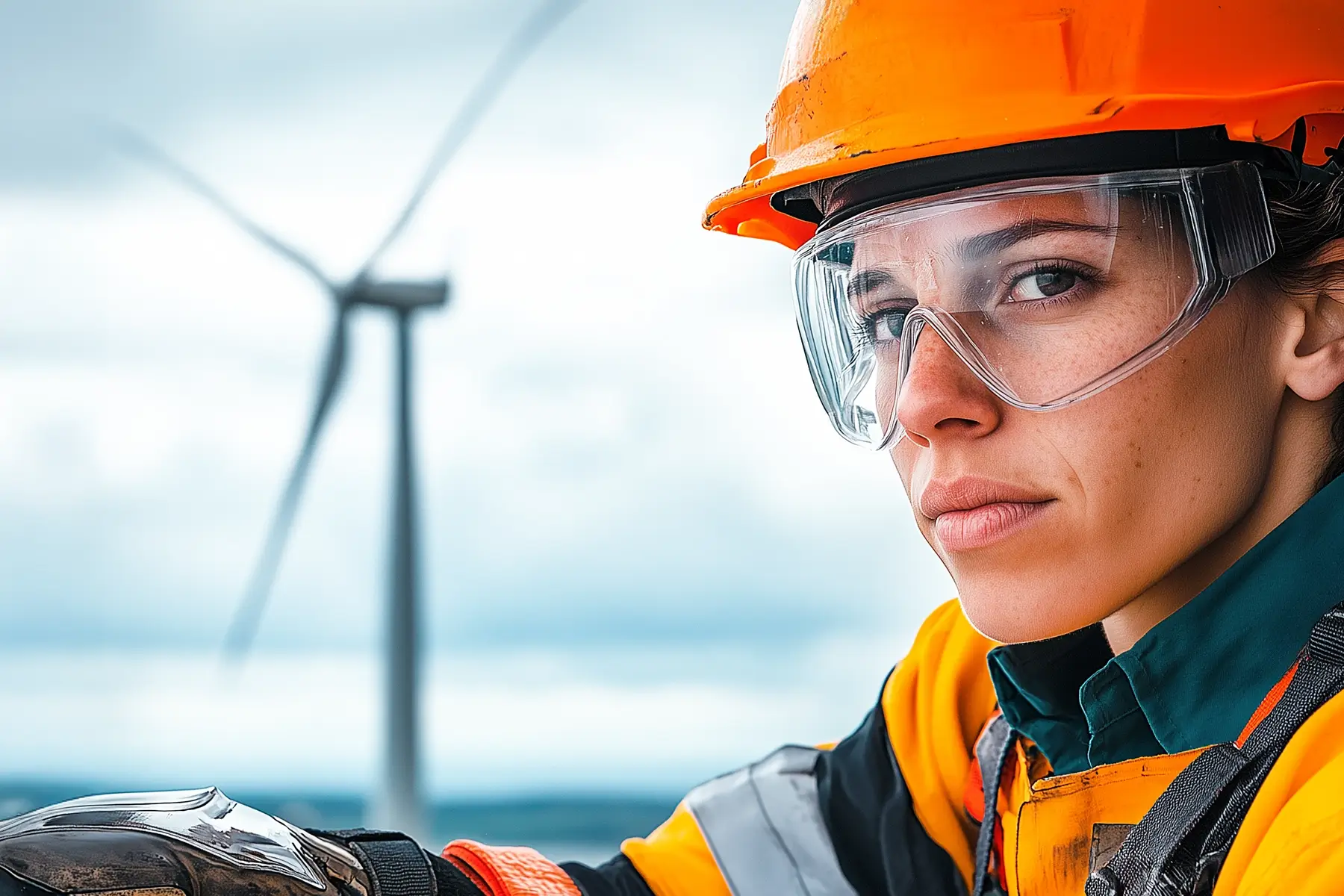
The Critical Importance of Modern Lone Worker Safety
NEWS
The Critical Importance of Modern Lone Worker Safety
Leveraging technology for real-time monitoring and protection
Lone working has become a common occurrence among the modern-day workforce, as the number of mobile workers continues to rise. Back in 2012, the International Data Corporation (IDC) estimated that the number of mobile workers would exceed 1.3 billion worldwide by 2015. As of 2025, mobile and lone working remains on an upward trend, which is why ensuring the safety of this large number of workers is paramount.

Understanding the Risks of Lone Working
It is the right of every worker to be guaranteed a safe and healthy environment; nevertheless, accidents may happen. According to the International Labour Organisation (ILO), almost 3 million people die every year due to work related factors and more than 300 million get injured. Furthermore, when it comes to lone working, the risks are exacerbated.
The Health and Safety Executive (HSE) has found that lone workers are more likely to get injured due to: slips, trips, falls, along with handling heavy objects, being struck, or falling from heights.
In order to mitigate these risks, safety precautions must be put in place. In high-risk work environments, such as construction sites, these dangers can never truly be removed; however, thanks to innovative technology like Ramtech’s REACT platform, lone workers can benefit from an extra level of protection.
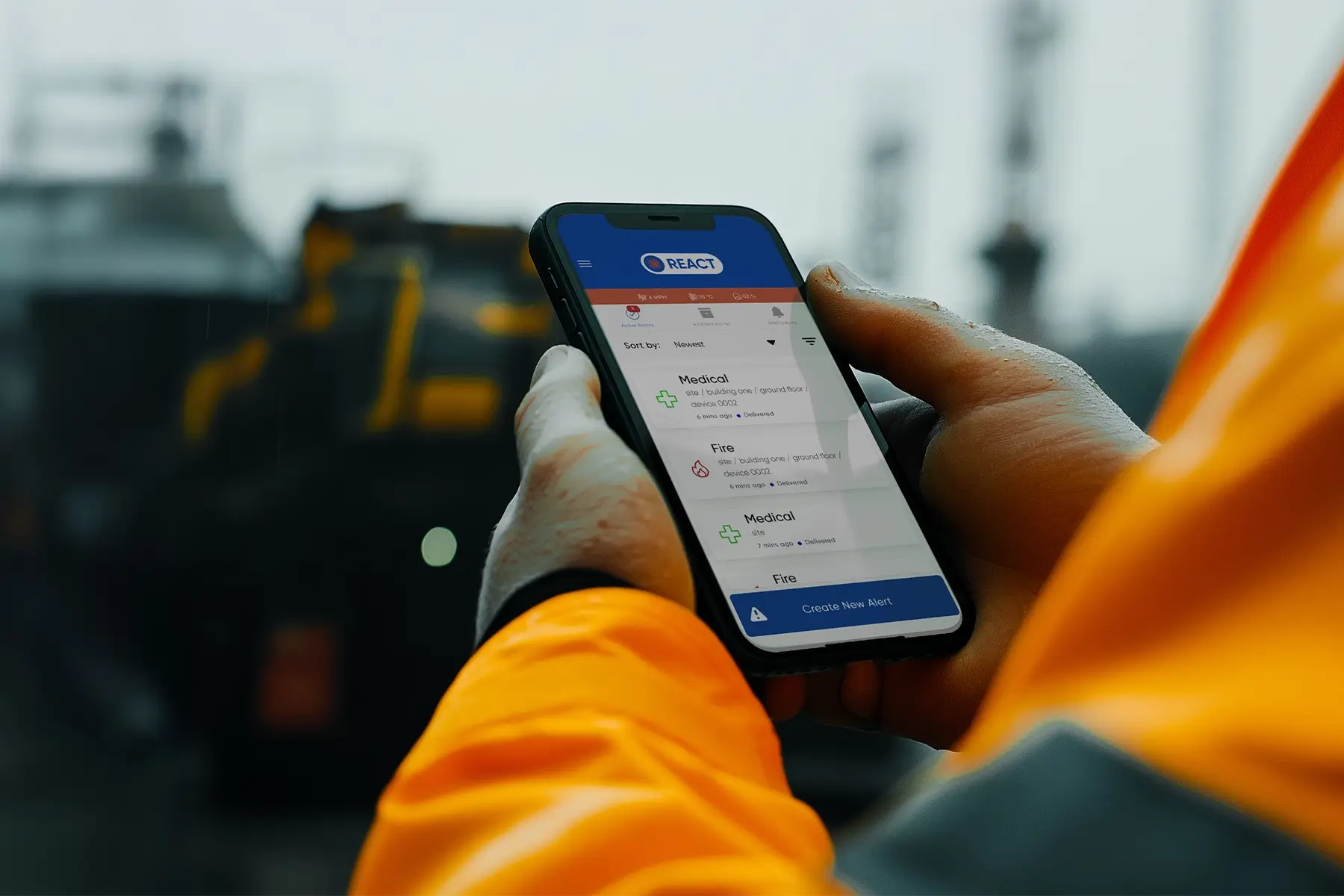
REACT is a cloud-based platform that wirelessly communicates with project managers’ mobile phone or desktop to quickly warn them of any immediate danger or emergency. REACT’s “lone worker” feature allows for individuals to effortlessly send out a distress call if injured. Furthermore, the app also provides project managers with the workers current location, so if anything happens they can quickly be found.
The Benefits of REACT
As technological advancements stand at the forefront of workplace safety, Ramtech is steadfast in developing the most innovative devices and software to guarantee the safety of those working in volatile and open-aired environments. Ramtech’s WES and REACT systems have already safeguarded numerous construction sites worldwide. In 2024, the company’s French team received the Fire Prevention Award from the French Federation of Firefighting Professions (FFMI) in recognition of their impact.
REACT enhances site safety by enabling rapid responses to critical incidents in any operational setting. From construction sites to industrial facilities and large-scale infrastructure projects, it equips safety teams with powerful emergency management tools. The system integrates effortlessly with existing safety protocols, delivering real-time monitoring, automated alerts, and detailed incident tracking, ensuring stronger personnel protection and full compliance.
Not only is the platform ideal for safeguarding mobile and lone workers, REACT also ensures the safety of the whole site. According to research conducted by the National Fire Protection Association (NFPA), although most fires on structures under construction occur from noon to 9 pm, fires that break out when nobody is on site (from midnight to 6 am) account for more than half the property damage.
Fire in Structures Under Construction by Time of Day
The provided graph illustrates that although fires on construction sites are most frequent between noon and 9 pm, those occurring when no staff is present, from midnight to 6 am, account for more than half (51%) of the total property damage, making rapid intervention crucial for site-wide protection.
With more than one billion people mobile or lone working all around the world, it’s important to address the inherent risks that come with doing so. Quick intervention is typically the key to avoiding further harm. By providing workers with an easy-to-use platform, lone workers can effectively send out a distress notification to project managers allowing them necessary assistance.
With over a billion people working alone or remotely around the globe, addressing the dangers of lone working is critical. Quick intervention often determines whether an incident leads to minor harm or major consequences.
Reassurance, Compliance, and Life-Saving Intervention
By equipping workers with easy-to-use technology like REACT, organizations can provide reassurance, strengthen compliance, and most importantly, save lives. Reassurance is paramount for individuals facing isolated and unsupervised conditions. The very nature of Lone Working can be stressful, but knowing that a simple, effortless press of a button will instantly notify managers of their exact location provides immediate peace of mind. This confidence is a powerful benefit, transforming the inherent risks of working alone into manageable challenges. This sense of security reduces worker anxiety, improves focus, and fosters a positive safety culture across the organisation, benefiting both the worker and productivity.


Hot-Works Fire Stopped Fast at Busy Shipyard
NEWS
Hot-Works Fire Stopped Fast at Busy Shipyard
Rapid detection and instant alerts showcase the power of the WES wireless life safety system
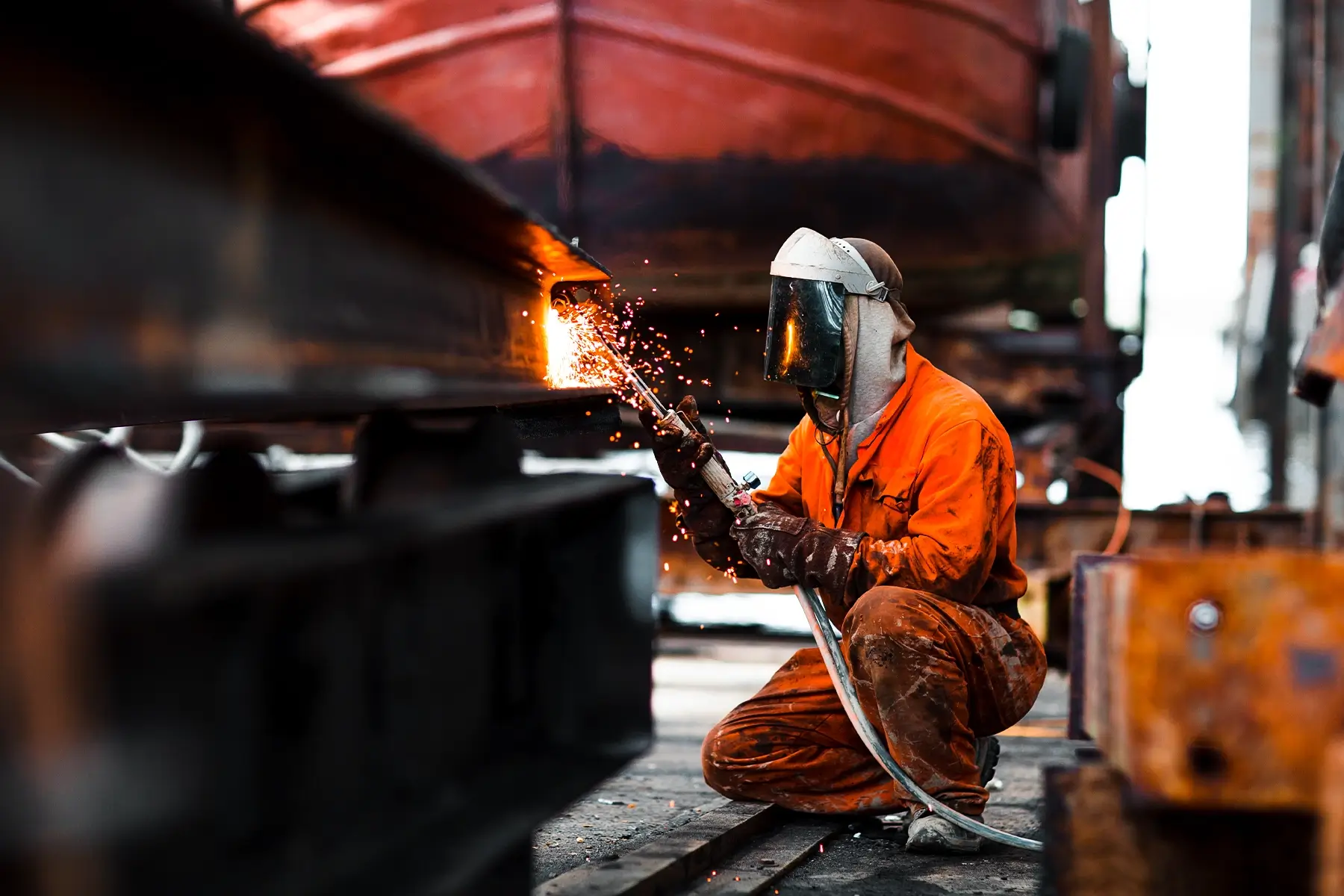
Hot-works such as welding, grinding and metal cutting are among the leading causes of industrial fire losses. This representative scenario, based on patterns seen in real industry incidents, shows how the WES wireless life safety system, integrated with the REACT Notification System can prevent a routine job from becoming a multi-million-dollar catastrophe.

Sparks Ignite Hidden Fire
At a busy U.S. shipyard, a maintenance crew was carrying out welding and cutting on the hull of a large vessel. Working to tight deadlines, they overlooked key safeguards: no formal hot-works permit and no dedicated fire-watch personnel. As the cutting torch burned through the steel plating, heat penetrated the far side of the hull and ignited hidden combustible materials. Fires like this can spread rapidly and, according to NFPA hot-work standards and UK HSE guidance, are a major cause of serious industrial losses.
Instant Detection Prevents Disaster
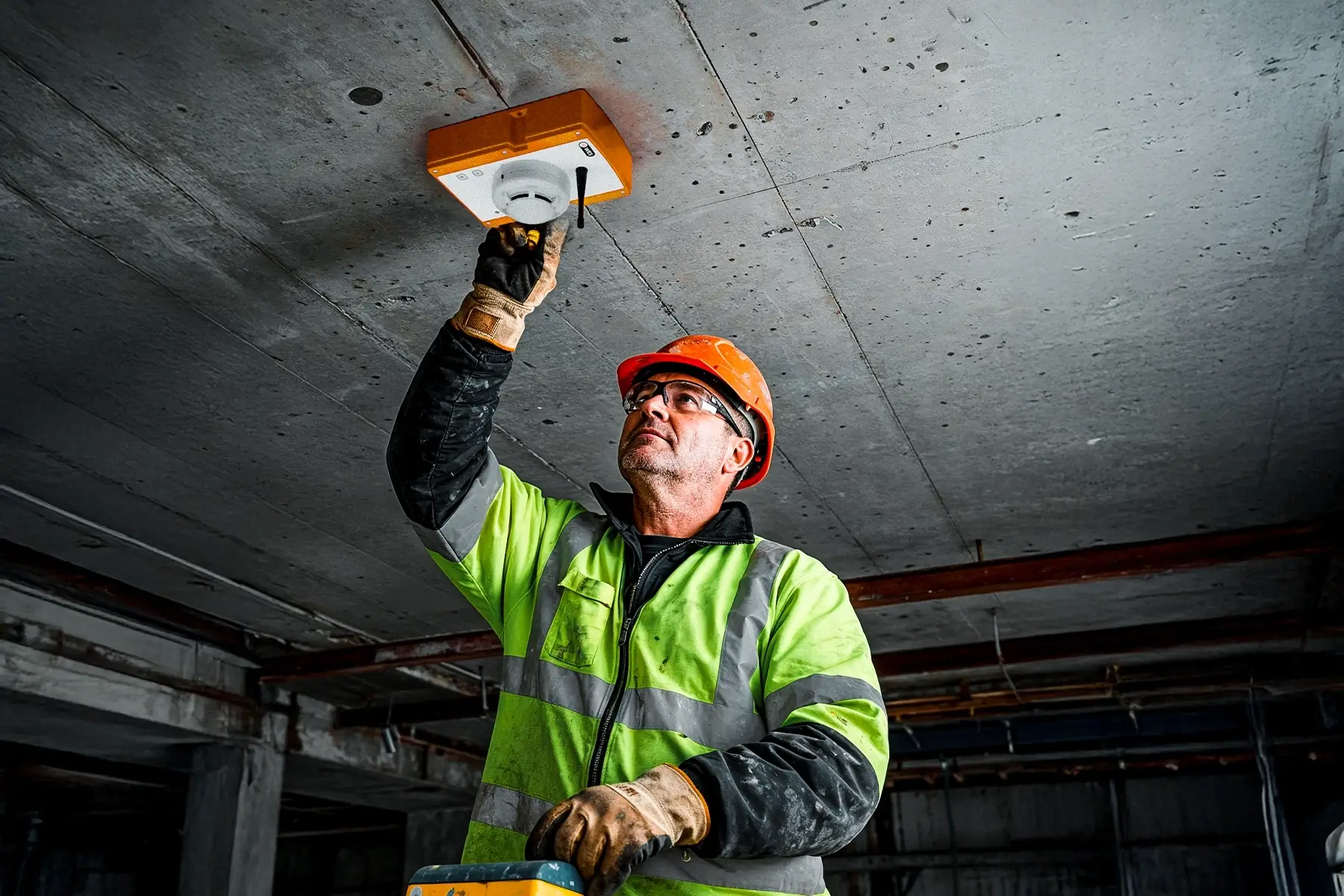
Fortunately, the site had deployed the WES wireless fire alarm, a life safety temporary wireless fire alarm system trusted on construction and marine projects worldwide. Integrated with the REACT Notification System, it delivered protection on multiple levels:
- Plug-and-play installation and three-year battery life meant the system was fully operational without permanent wiring.
- Dust-resistant smoke sensors and a robust mesh network provided reliable coverage even in the demanding marine environment.
- The REACT Notification System sent instant 24/7 alerts to safety teams and mobile devices the moment smoke was detected.
Within seconds, audible alarms sounded and key personnel received real-time notifications, allowing crews to extinguish the fire before it spread.

Outcome: Safety and Continuity Preserved
Thanks to the WES wireless firm alarm and the REACT Notification System, the fire was contained quickly saving lives and property. No injuries occurred, damage was minimal and operations continued without costly delays. This scenario shows how Ramtech’s integrated solution gives site managers confidence that even high-risk hot-works can be performed safely.
Lessons Learned
This near-miss reinforces a critical lesson: fire risk never takes a break. Even experienced crews can become complacent under time pressure. Without a valid hot-works permit or an active fire-watch, sparks can reach unseen combustibles in seconds. Industry regulators such as NFPA consistently warn that human error and skipped procedures remain the leading causes of hot-works fires. The incident highlights the need for both procedural discipline and reliable, automated detection.
Planning & Prevention Tips
Site managers can reduce the likelihood and impact of hot-works fires by:
- Requiring formal hot-works permits and ensuring each permit clearly outlines the scope and safety checks.
- Assigning a trained fire-watch to monitor the area during and after all hot-works.
- Keeping combustibles clear of the work zone, or shielding them with fire-resistant materials.
- Installing a WES wireless fire alarm with REACT integration to provide real-time, site-wide alerts even when personnel are spread across large or complex environments.
- Training crews on emergency procedures and regular testing of alarm systems.
These steps combine proven human procedures with the technology needed for rapid, reliable detection, an approach that protects both people and high-value assets.
Why Choose WES
Ramtech has led wireless life-safety innovation since 1990. The WES wireless fire alarm, EN54-25 compliant and recognised with industry awards, delivers reliable, site-wide fire detection and evacuation alerts where permanent systems are impractical. Learn more about WES3 and the REACT Notification System to see how Ramtech protects people and property in dynamic environments.
Safeguarding Shipyards through the Power of Wireless
NEWS
Safeguarding Shipyards through the Power of Wireless
What we can learn from the Bristol Underfall Yard incident
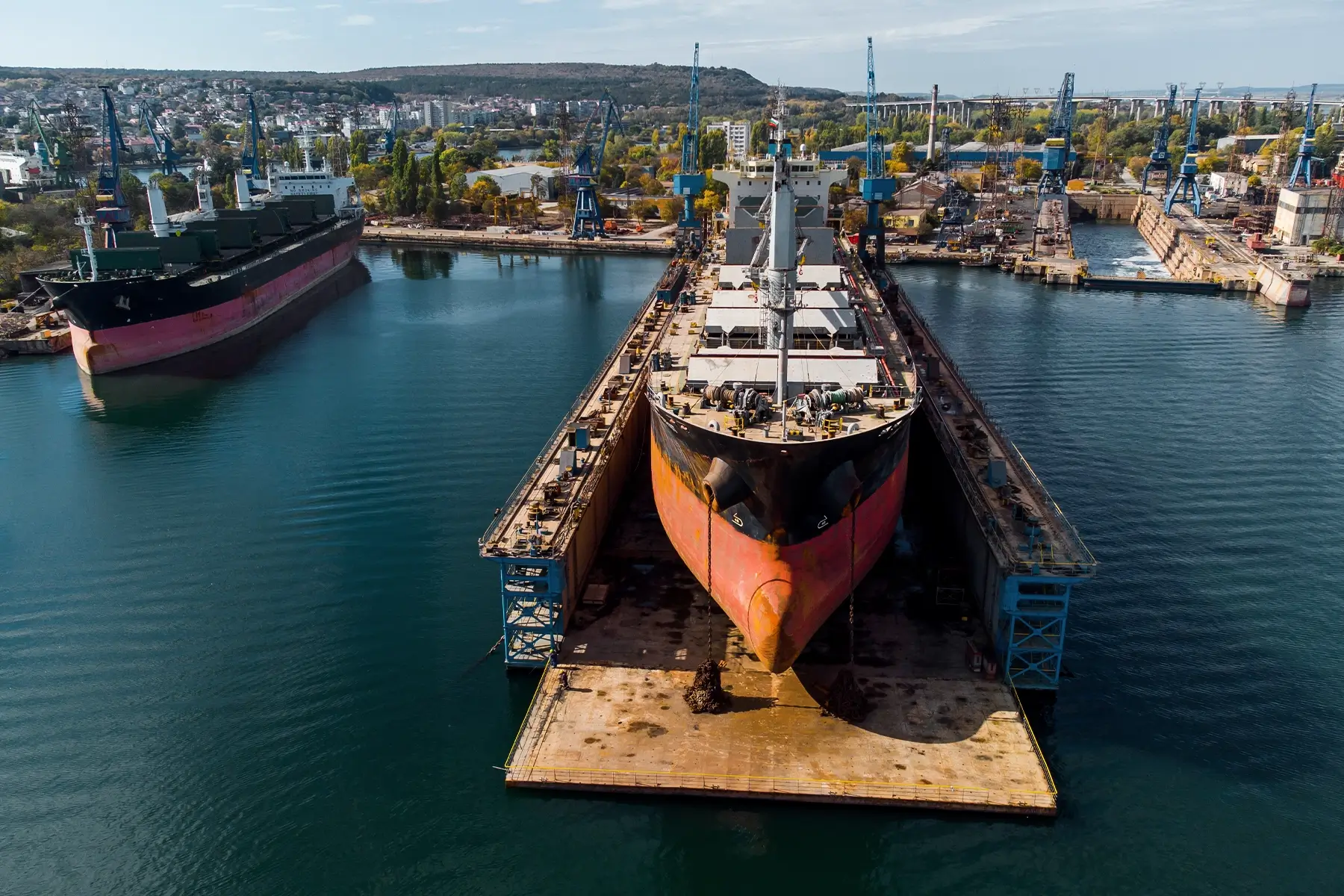
In May 2023, a devastating fire at Bristol’s Underfall Shipyard, started by arson, destroyed a large part of the site, including a workshop and six boats. Although the yard has been restored, the incident serves as a stark reminder of the unique fire risks at large, open-air sites. It highlights the critical need to safeguard these environments, where flammable materials and heavy machinery pose a constant threat to both assets and personnel.
Ships and Shipyard Fires are still a Concern
Although the actual number of shipyard fires is not well known, according to an analysis done by the Allianz Group, fire-related losses accounted for 18% of the value of all claims in the marine industry back in 2023. It’s hard to pin down a single reason for all these incidents, however, when it comes to the infrastructure used to construct these vessels, changes can be made.
Ramtech is devoted to creating safer environments for open-air sites. The WES and REACT systems, developed by Ramtech, have already ensured the safety of many construction sites around the world. In 2024, Ramtech’s French team were even awarded the Fire Prevention Award by the French Federation of Firefighting Professions (FFMI). Because of the system’s proven reliability within the construction industry, they may prove extremely helpful to reduce the risk of fires across shipyards.
Using Wireless Technology in Boatyards
Ramtech’s WES is an advanced wireless fire and evacuation system, designed especially for demanding conditions. Innovation is at the heart of Ramtech, along with the WES system Ramtech has developed the REACT platform: a mobile and desktop application that can effectively inform project managers on the status of the whole system even when the site is left unattended. Contrary to other devices on the market, Ramtech’s WES system runs on a mesh network, in which every device is in constant communication, eliminating the need for multiple translators. Furthermore, WES devices are dust-resistant, which is paramount when installing them in environments with heavy machinery. However, what truly rounds out Ramtech’s comprehensive catalogue of fire safety devices is their Linear Heat Detectors, developed in collaboration with Thermocable.
This innovative technology has already been used in complex projects, such as the Edge Apartments facade replacement project. The apartment block consisted of two high-rise buildings 10 and 5 storeys tall. The project’s scope required extensive scaffolding and, thanks to Linear Heat Detection technology, all levels of scaffolding were fully monitored to respond effectively in case of a fire.
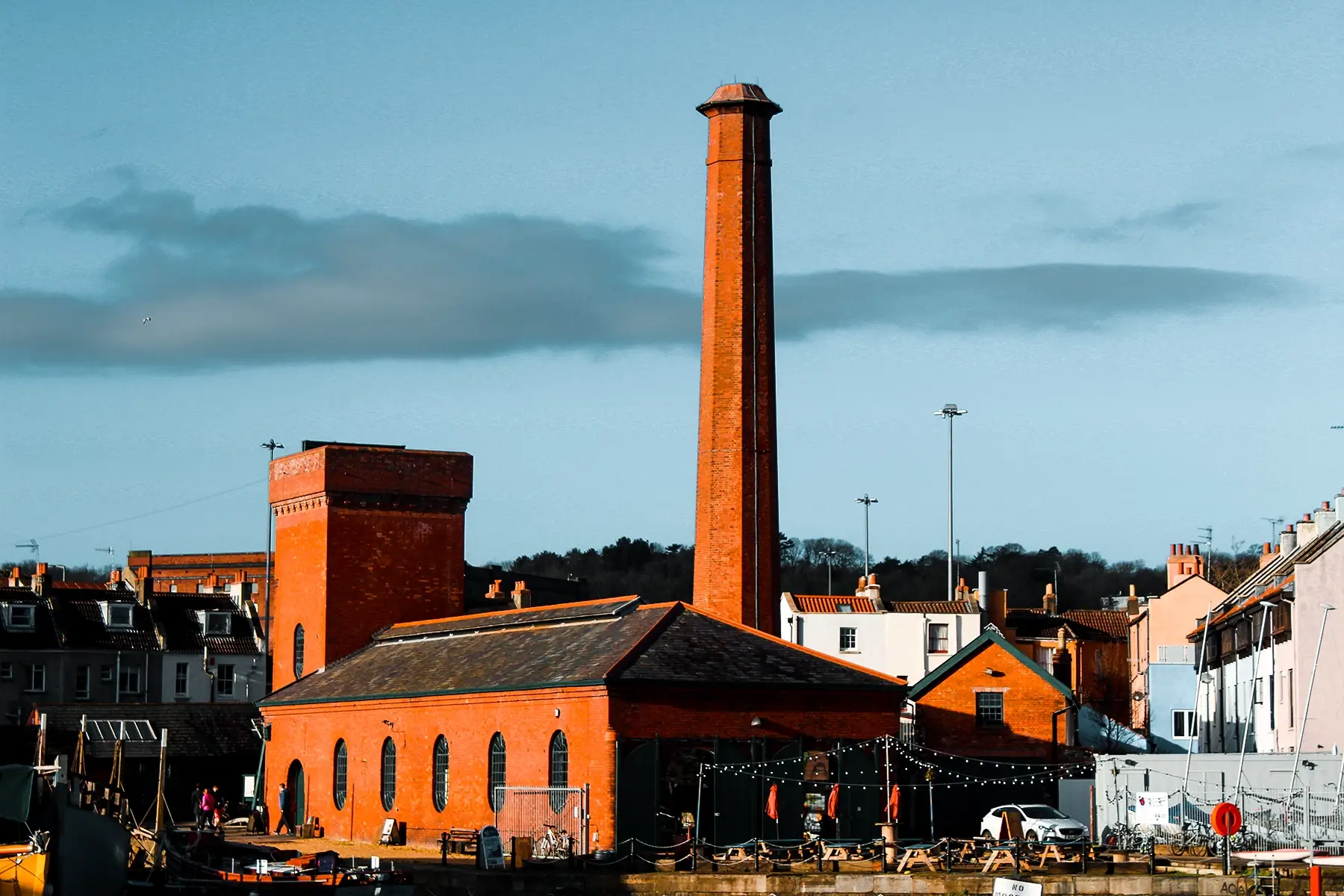
Credit: BlytheVarney
Challenges of Shipyard Fire Prevention
The 2023 Bristol shipyard fire was devastating. According to Will Rafferty, director of Star Yachts, the boat-building firm that had been operating in the yard since it opened in 2009: “The fire in 2023 was a big loss for the entire team, both in terms of work but also emotionally.” Wireless fire systems, such as WES paired with REACT and Linear Heat Detectors, can be highly effective in ensuring the safety of open-air shipyards. Shipyard managers face unique challenges that make fire prevention critical. Open-air yards often contain flammable materials and heavy machinery, putting workers at constant risk
Vessels, workshops, and expensive equipment are vulnerable to fire damage, which can result in significant financial loss. A single incident can halt operations for days or even weeks, disrupting production schedules and affecting revenue. At the same time, managers must ensure compliance with fire safety regulations to avoid fines or operational shutdowns, while also keeping insurance premiums manageable. By implementing wireless solutions like WES, REACT, and Linear Heat Detection, shipyards can address these risks proactively, protecting both personnel and assets while maintaining smooth, uninterrupted operations.
Whether it’s high-rise buildings or expansive shipyards, wireless technology can and should play a pivotal role in safeguarding both workers and the infrastructure they work in. The Bristol fire, while not resulting in any injury, tragically led to the loss of a workshop and six boats. However, with the prompt notifications from the REACT platform and the comprehensive coverage of the WES system, these incidents may be significantly reduced.
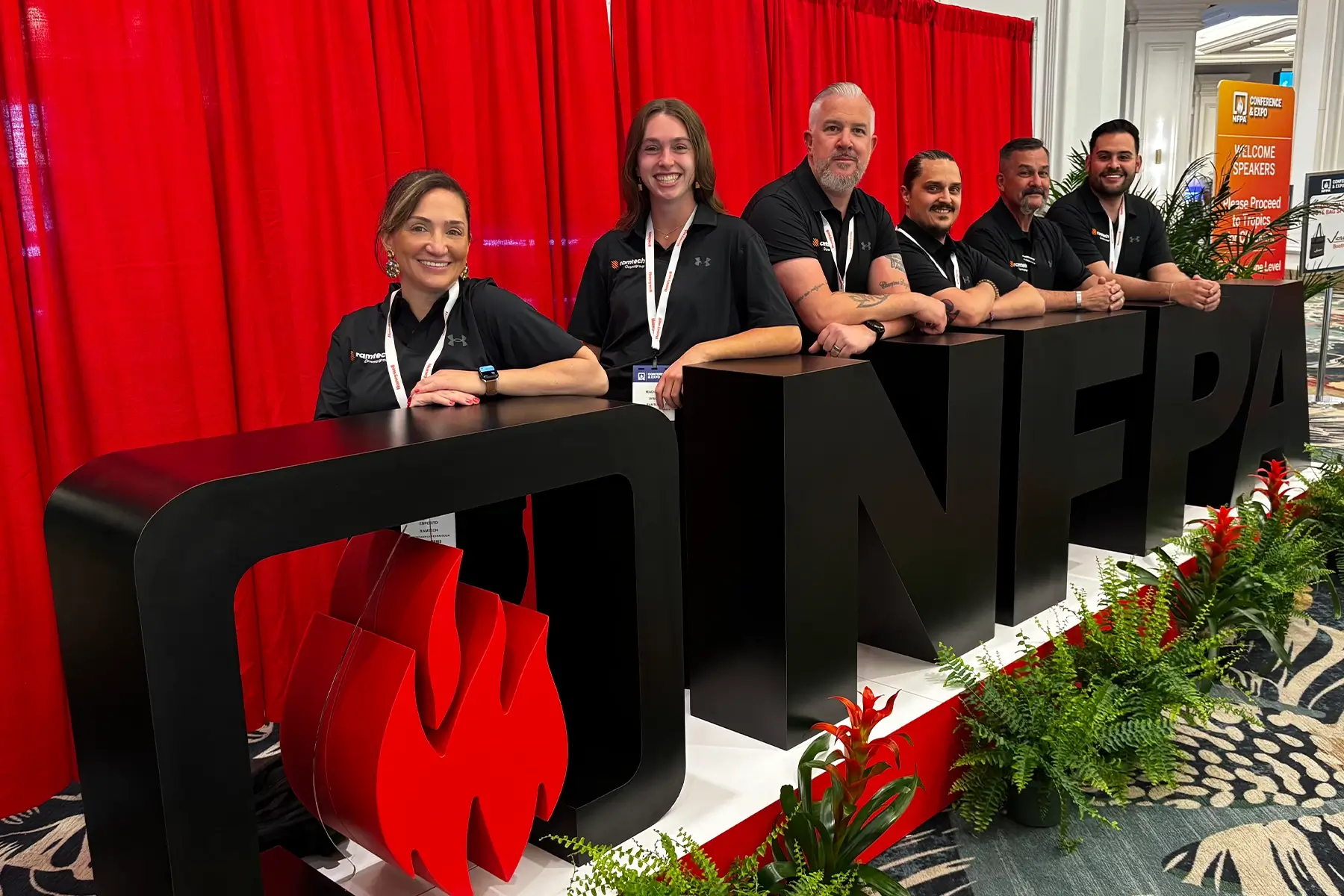
Ramtech Announces Leadership Promotion for James Pecz
NEWS
Ramtech Announces Leadership Change
James Pecz promoted to Head of North America, Middle East & Global CX
Ramtech Electronics is proud to announce the promotion of James Pecz to Head of North America, Middle East & Global Customer Experience. Since joining Ramtech in 2017, James has played a pivotal role in driving international growth, spearheading strategic partnerships, and shaping the company’s approach to customer engagement across multiple regions. His leadership has been instrumental in expanding Ramtech’s presence in new markets, including Australia and Saudi Arabia, while ensuring the company remains at the forefront of wireless fire safety innovation.

In his new role, James will oversee operations and business development across North America and the Middle East, two regions where demand for Ramtech’s cutting-edge fire safety and monitoring solutions continues to grow rapidly. He will also lead the company’s Global Customer Experience strategy, ensuring that clients around the world benefit from seamless support, training, and tailored solutions to meet evolving project needs. His appointment reflects Ramtech’s ongoing commitment to placing customers at the centre of its mission to deliver safety, savings, and sustainability across the industries it serves.
James’s promotion underscores Ramtech’s confidence in his vision and proven ability to deliver results. His track record of forging international alliances, launching innovative partner programmes, and championing customer-focused initiatives demonstrates his capacity to drive both growth and service excellence. As he steps into this expanded leadership role, James will continue to build on Ramtech’s reputation as a trusted global partner in wireless safety solutions.

What is a Mesh Network: Why it Benefits the WES Network
NEWS
What is a Mesh Network: Why it Benefits the WES Network
Understanding mesh network technology and how it powers WES3’s site-wide wireless fire and evacuation protection.
Wireless communication is at the heart of modern safety systems. Whether the goal is to protect a construction project, an industrial facility, a port, a public venue or a historic landmark, the underlying network determines how effectively alerts are delivered. In the case of WES, the wireless fire, evacuation and safety system, reliability is paramount. This is why it uses a mesh network — a topology designed to keep communication flowing even when conditions change or obstacles appear.
What is a Mesh Network?
A mesh network is a wireless communication structure where each device, or “node,” connects to multiple others. Instead of relying on a fixed path from sender to receiver, a mesh network offers many possible routes for messages to travel.
If one route is blocked, perhaps by a building, a piece of equipment or radio interference, the system automatically reroutes the data through another available path. This property is called self healing, and it means that mesh networks can maintain operation without manual intervention, even in unpredictable or dynamic environments.
Mesh networking is trusted in fields where communication cannot fail. Military operations, industrial monitoring, disaster recovery and emergency services all use it. In WES systems, it provides that same resilience for safety critical fire and evacuation signalling.
Network Topologies Explained
To understand why mesh is the most robust choice for WES, it helps to compare it with other common network types.

Point-to-Point
In a point to point network, communication travels directly between two devices, often in a chain. This can extend range but creates a single point of failure. If any device in the chain is removed, damaged or goes out of range, all devices beyond it lose connection. Message delivery is also slower, as data must pass step by step through each device.

Star
A star network connects all devices to a single central hub. This can deliver fast, direct communication as long as the hub is functioning. However, if the hub fails, the entire network stops working. Range is limited because every device must remain within direct contact of that central point, which is rarely practical in large, obstructed or evolving layouts.

Mesh
In a mesh network, every device can connect to several others, creating overlapping routes. If one link fails, another is instantly used. Because messages can hop from node to node, range is effectively extended, and there is no dependence on one central hub.
Why WES Uses Mesh Networking
The WES3 system employs a flooded mesh protocol. In this design, every device that hears a message retransmits it. This ensures that alerts spread rapidly and reliably across the network, regardless of which devices are active or where they are positioned.
Key benefits include:
-
Resilience — The network keeps operating even if some devices fail or are removed
-
Adaptability — Units can be added, moved or removed without reprogramming
-
Coverage — Each device has a range of up to 300 metres line of sight, with link units extending this further
-
Efficiency — Devices use low power listening, briefly waking to check for messages, which preserves battery life while ensuring no alerts are missed
Applications Beyond Construction
While WES was initially created for temporary fire safety on construction sites, mesh networking makes it ideal for many other environments
-
Industrial sites — Spanning multiple buildings, metal structures and complex layouts
-
Marine environments — Docks, shipyards and offshore facilities
-
Event venues — Festivals, stadiums, temporary exhibition spaces
-
Heritage locations — Historic buildings where wiring would be invasive or prohibited
-
Remote infrastructure — Bridges, tunnels and energy facilities such as wind farms or substations
In each scenario, the mesh topology ensures uninterrupted safety coverage despite distance, interference or environmental change.
Standards and Compliance
The WES3 mesh network design supports compliance with key safety standards
-
NFPA 241 – US standard for safeguarding construction, alteration and demolition operations
-
IP55 rating – Protects against dust ingress and low pressure water jets from any direction
-
EN54 25 – European standard for wireless fire detection and alarm systems
These certifications ensure WES is suitable for regulated safety environments across multiple regions and sectors.
Mesh vs Point to Point and Star
-
Point to Point — A single link fails, the network breaks
-
Star — Hub fails, the network fails
-
Mesh — Multiple paths ensure the network survives both link and node failures
In safety applications, where delayed or failed alerts could cost lives, these differences are decisive.
How WES Mesh Works in Practice
In the WES mesh network, each device acts as both transmitter and receiver. This allows simultaneous multi directional communication. The flooded mesh protocol means a message does not need to find a single “best” path before sending, it simply spreads across all available routes.
If a device is obstructed, removed or damaged, the network instantly redirects messages around it. This real time adaptability is vital in environments where layouts shift, vehicles move or construction activity may temporarily block signals.
Because no device is a single point of failure, the WES mesh network remains functional under conditions that would stop other network types.
Why Flooded Mesh is the Best Choice
Not all mesh networks operate the same way. WES uses flooded mesh, where every device repeats any message it receives. This results in
-
Faster alert distribution across the network
-
No need for pre calculating optimal routes
-
High tolerance for sudden layout changes or unexpected blockages
While flooded mesh uses more energy during transmission, WES devices offset this with highly efficient low power listening cycles, giving batteries a life measured in years rather than months.
More Than Technology
A mesh network is more than a way to connect devices, it is the backbone of dependable wireless safety systems. By using a flooded mesh protocol, WES delivers unmatched resilience, coverage and adaptability. This approach removes the weaknesses of simpler topologies, ensuring that alerts always reach their destination.
From ports to power stations, from heritage sites to high rise builds, WES delivers protection built on a communication structure designed never to fail when it matters most.
Conclusion
A mesh network is more than a way to connect devices, it is the backbone of dependable wireless safety systems. By using a flooded mesh protocol, WES delivers unmatched resilience, coverage and adaptability. This approach removes the weaknesses of simpler topologies, ensuring that alerts always reach their destination.
From ports to power stations, from heritage sites to high rise builds, WES delivers protection built on a communication structure designed never to fail when it matters most.
Dive Deeper into WES Mesh Technology
For a detailed technical insight into the WES radio protocol and network topology, download the full whitepaper from our Product Innovation team.
When Old Meets New: Integrating Fire Safety into Refurbished Spaces
NEWS
When Old Meets New
Integrating Fire Safety into Refurbished Spaces
Refurbishing historical or older buildings has become a popular trend, blending the charm of the past with modern functionality. Whether converting a 19th-century factory into stylish loft apartments or transforming a historic church into a community centre, these projects offer unique opportunities to preserve heritage. However, they also pose significant challenges, none more pressing than ensuring fire safety. Balancing the preservation of architectural integrity with modern fire safety standards is a complex but essential task.
Refurbished spaces often retain materials and layouts that were not designed with contemporary fire safety standards in mind. For example, wooden beams, narrow staircases, and open-plan designs common in older buildings can act as fire accelerants or hinder evacuation. Furthermore, electrical systems in older buildings may not support modern demands, increasing the risk of overheating and electrical fires.
Fire Risks in Historic Buildings
Adding to these challenges is the fact that many historical buildings were constructed before fire safety codes became standard practice. As a result, integrating fire safety into refurbished spaces requires a tailored approach that respects the original design while addressing modern risks. Older buildings often lack proper compartmentation to prevent the spread of fire. Modern fire-resistant materials can be subtly incorporated into walls, ceilings, and floors to contain a potential fire while maintaining the building’s original character.
Modern fire safety relies on advanced detection technologies. Among these, WES3 system by Ramtech stands out as a wireless fire alarm system specifically designed for refurbishment projects. With the combination of the WES3 system and REACT platform, Ramtech provides continuous monitoring of building conditions. This ensures immediate notifications of potential risks, enabling swift interventions and proactive safety management. Advanced smoke detectors, heat sensors and alarm systems can be discreetly integrated into refurbished spaces without disrupting the aesthetic. Wireless systems are particularly beneficial, as they eliminate the need for invasive wiring that could damage historical features.
Preserving Aesthetic While Ensuring Safety
Refurbishment must comply with regulations regarding emergency exits and evacuation routes. However, historical layouts often make these updates challenging. Creative solutions, such as adding external fire escapes or converting windows into emergency exits, can address these challenges without compromising the building’s heritage value.
Refurbishing historic spaces requires close collaboration between architects, engineers, preservation authorities, and fire safety experts. Involving fire safety solution providers like Ramtech early in the process is essential to ensure that safety measures are seamlessly integrated into the design process.
Their expertise helps mitigate risks and ensure compliance with local regulations without project delays.
Whether restoring landmarks or modernising a period property, Ramtech provides solutions that honour the past and protect the future. Together, we can preserve history while building a safer future.
Ensure your refurbishment project meets the highest fire safety standards without compromising its heritage. Discover how Ramtech’s innovative solutions, like WES3 system and REACT platform, can help you safeguard your space while maintaining its historical charm.

Understanding Railway Safety and its Past
NEWS
Understanding Railway Safety and its Past
Despite being a fundamental part of modern society, the railway sector is still one of the most dangerous industries to work in due to the high volume of hazards and working conditions. However, we’ve come a long way in safeguarding railway workers in the last 100 years. From difficult terrain to moving trains, railway workers must always be vigilant and aware of the dangers that surround them, which is why it’s important to develop innovative technology that can help lighten the load workers must deal with when helping to construct one of the safest modes of transportation for passengers.
Railway safety 100 years ago
When it comes to safety within the railway industry, there are many improvements that must be made. However, the sector has come a long way since its early days more than 100 years ago. In the late 19th and early 20th centuries, railway workers were barely granted any safety equipment and most companies would only go as far as putting up a cast-iron sign to warn workers of hazards. This led to an extensive amount of deaths; so many, in fact, that companies would often set up orphanages for children whose parents perished while working on the railway. In the mid 20th century things began to change, railway companies began enforcing workers to wear protective equipment and many safety campaigns were created to raise awareness.
The future of railway safety
Although these campaigns and guidelines helped create a safer working environment, the fact remains that railway work is a dangerous job and many hazards cannot be overcome simply by wearing protective gear or being extra careful. Fires that can occur due to faulty machinery or live-wire cables, are especially dangerous due to the open-air nature of the workplace. Modern technology, such as Ramtech’s WES3 and React wireless systems, can be ideal in preventing these incidents. WES3 was especially designed to reliably identify and alert people in case a fire were to break out in an open-air environment such as a work site. This technology can be game-changing in the Railway industry, safeguarding workers, passengers and construction as a whole.
With high-speed train infrastructure being built all around the world, preventing accidents from occurring during the construction process is crucial. Ramtech prides itself in developing technology that is specifically designed to mitigate these risks. By pairing the WES3 system with REACT, a cloud-based platform that combines state-of-the-art wireless technology, a user-friendly mobile phone app and browser management tool, Ramtech allows project managers some peace of mind as it accurately and effectively delivers alerts whenever it detects a fire on site.
In 2023, there were 1567 significant railway accidents in the EU. Although the number has been steadily decreasing since 2010, there are still hurdles and challenges to overcome. By embracing innovative devices like Ramtech’s WES3 and REACT systems, workers are not only granted an elevated level of safety but companies can also more effectively develop necessary infrastructure for a more sustainable world in the future.
Playing a part in Saudi Arabia’s ambitious development projects
NEWS
Playing a part in Saudi Arabia’s ambitious development projects
the future of construction and fire safety
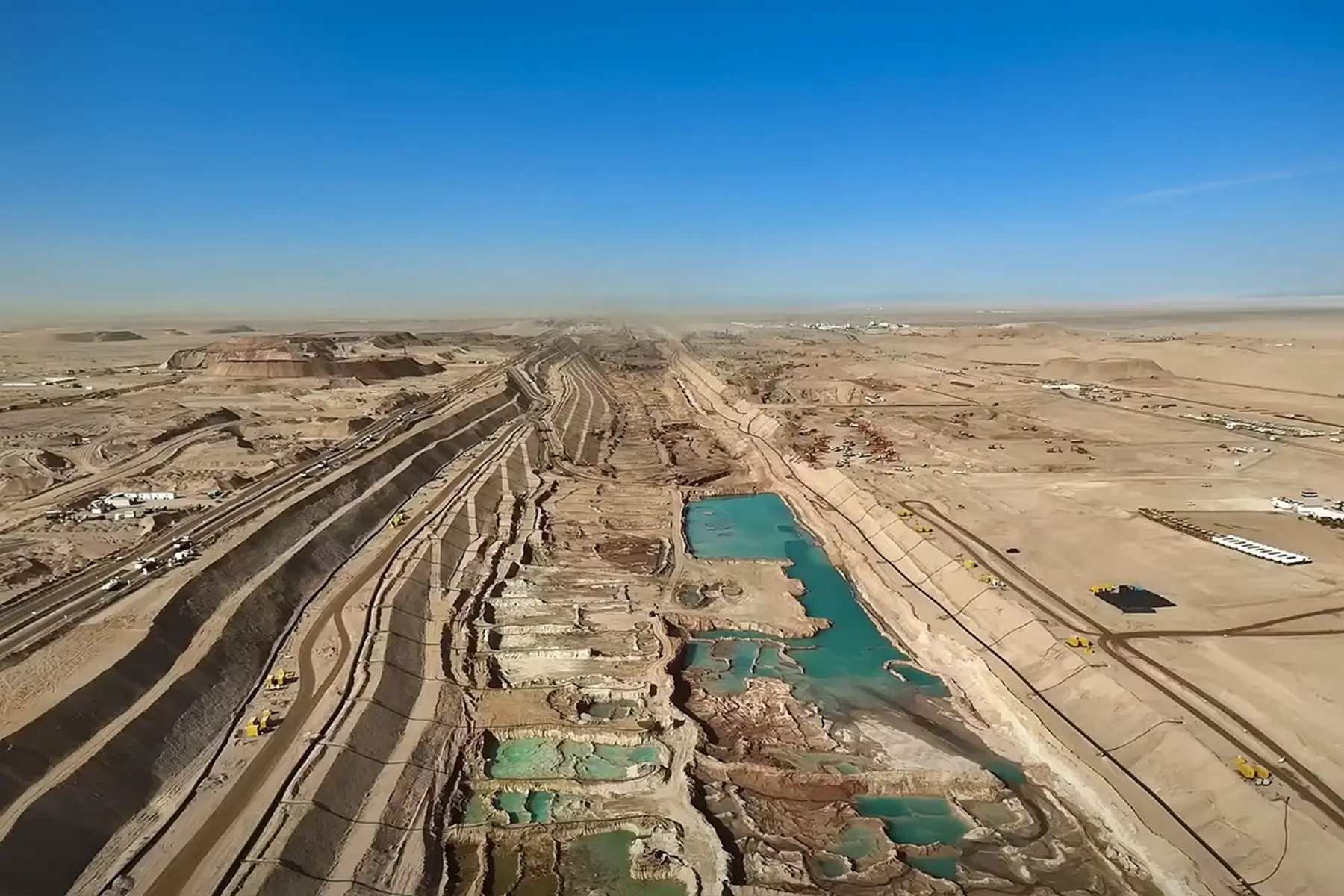
From a large-scale luxury resort on the Red Sea all the way to a linear, sustainable, revolutionary city, Saudi Arabia is embarking on a multi-billion dollar development project, in an effort to reduce its dependence on oil, diversify its economy, and develop public service sectors. Considering the scale of these projects, and the deadlines they wish to adhere to, fire-safety systems plays a crucial role in safeguarding these high-profile construction sites: protecting both workers and budgets alike.
The Line: An Audacious Urban Plan
Perhaps the most ambitious project Saudi Arabia is planning is “The Line”: a smart city initiative said to redefine urban living and sustainability. As the name suggests, the city will be constructed in an unorthodox fashion, the plan is to build linearly in order to preserve space and energy. Spanning 170 km in length, “The Line” aims to shed the need for cars and aspires to run on 100% renewable energy.
Ramtech’s WES3 and REACT systems are ideal for precisely these kinds of projects. Due to their innovative wireless technology, these fire alarm systems are fine-tuned to work on construction sites, alerting project managers when incidents arise even when left unattended. With a staggering 500 billion-dollar budget, it’s crucial that massive development projects, such as “The Line”, are carried out smoothly, since any minor delay can cost an exuberant amount. By pairing Ramtech’s WES3 system with their REACT cloud-based platform, construction sites are guaranteed an extra layer of protection, not only in case of fires, but also water damage and accidental injuries.
Standing on the cusp of greatness
In 2021, the Saudi Arabian construction industry was valued at over 120 billion dollars. With such great plans for the future of the country, and so many projects underway, never before has there been such a need for temporary wireless fire alarms. Ramtech’s products, much like the structures Saudi Arabia plans on building, are groundbreaking; blending state-of-the-art wireless technology with an easy-to-use mobile app, Ramtech’s systems are ideal in assisting Saudi Arabia in this ambitious endeavor.
Digital technologies are revolutionizing construction processes, enhancing efficiency from design to project management by minimizing time and resource waste. Building Information Modeling (BIM) enables precise 3D modeling and real-time collaboration, reducing errors and the need for rework. Advanced tools like drones, IoT sensors, and AI deliver real-time data for improved monitoring and site safety. Embracing these tools is merely the first step in achieving a more advanced and sustainable world. As the Saudi Arabian construction industry continues to grow, Ramtech is proud to be embarking on this innovative journey, safeguarding construction sites and ensuring these innovative projects are carried out safely and efficiently.
The Digitalisation of Construction Sites
NEWS
The Digitalisation of Construction Sites
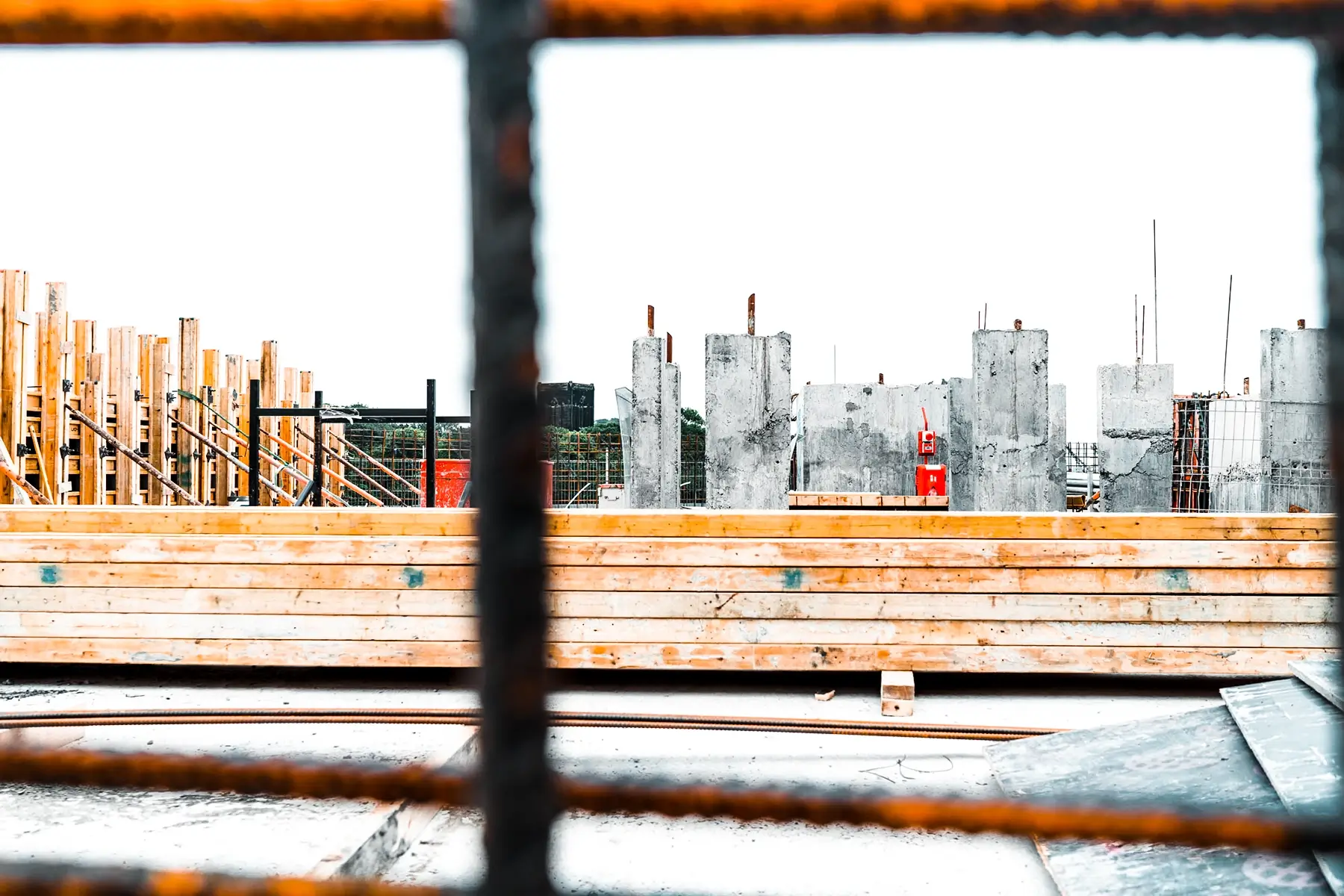
The traditionally "brick and mortar" construction industry stands on the brink of a monumental transformation: digitalisation. This shift has been long anticipated but historically resisted due to the industry's reliance on traditional methods. Today, however, digital tools have become more accessible, leading to their increasing adoption on construction sites, which has resulted in significant improvements in efficiency, safety, and overall project management.
The Future is Digitalised
As clients adapt to rapidly evolving markets, they demand more individualised and modular workspaces. Internet connectivity allows environments to optimise energy efficiency and enhance health and security parameters. Therefore, the construction industry must embrace digital tools to stay aligned with global trends.
Concerns about digitalisation replacing manual jobs are common but largely unfounded. Studies suggest that digitalisation is more likely to create new job opportunities and roles to accommodate the evolving landscape. Embracing innovative technology can significantly enhance worksite safety, streamline operations, and lead to cost savings.
Ramtech’s REACT: Next-Level Safety
Innovative products like Ramtech’s REACT platform are revolutionising construction site safety. REACT is a cloud-based platform designed to send tailored alerts for various emergencies, providing comprehensive 24/7 monitoring. This drastically reduces the risk of fires causing significant damage during unsupervised hours. Research by the National Fire Protection Association (NFPA) indicates that 51% of property damage occurs between midnight and 6 am, when sites are largely unsupervised. REACT addresses this by accurately identifying and communicating incidents, sending alerts to project managers through an intuitive mobile app.
REACT provides real-time alerts in case of fire, reducing response times and mitigating damage. It easily connects to WES3 Wireless Fire and Evacuation System to detect fires early, ensuring prompt notification to relevant personnel. The system also monitors for water leaks or flooding, sending immediate alerts to prevent extensive damage. This is crucial in protecting equipment and materials that could be severely affected by water. One of the standout features of REACT is its ability to alert relevant personnel during medical emergencies, ensuring that medical help can be dispatched quickly, potentially saving lives.
The “Lone Worker” feature ensures the safety of individuals working alone. Workers can check in regularly, and their GPS location is tracked, allowing for quick assistance if needed. Site supervisors can issue site-wide emergency alerts, ensuring all workers are informed of any imminent dangers.
This feature is particularly useful for large construction sites where communication can be challenging. REACT also allows workers to file hazard reports easily, with the option to attach photographs for clarity. This helps in maintaining a safe work environment by addressing potential risks promptly. The system provides continuous monitoring, ensuring that any incidents are detected and reported immediately, regardless of the time of day.
By providing real-time alerts and continuous monitoring, REACT significantly enhances the safety of construction sites, protecting both workers and assets. Early detection of issues such as fires and water leaks can prevent extensive damage and costly repairs. The system’s efficiency in handling emergencies also minimises downtime, further reducing costs. REACT helps construction sites comply with safety regulations by ensuring that all incidents are documented and addressed promptly. This can be particularly beneficial during safety audits and inspections. The platform streamlines communication and emergency response, improving overall site management and efficiency. By reducing response times and ensuring that all personnel are informed, REACT helps maintain smooth operations even in emergencies.
Benefits of Digitalisation in Construction
Digital tools streamline various construction processes, from design to project management, reducing time and resource wastage. Building Information Modeling (BIM) allows for detailed 3D modelling and real-time collaboration, minimising errors and rework. Technologies like drones, IoT sensors, and AI provide real-time data and monitoring, improving site safety. Drones offer aerial surveillance, while IoT sensors monitor environmental conditions and machinery status. Digital tools can significantly reduce costs by optimising resource use, improving project timelines, and reducing errors and rework. Predictive maintenance and automated workflows further contribute to cost efficiency. Digitalisation also aids in sustainable construction practices by optimising energy use, reducing waste, and enabling the use of eco-friendly materials and methods. Access to real-time data and advanced analytics helps in making informed decisions, improving project outcomes and client satisfaction.

Ramtech triumphs at the 2024 FFMI OSCARS and wins the awards in the "Fire Prevention" category
NEWS
Ramtech triumphs at the 2024 FFMI OSCARS
Wins the awards in the "Fire Prevention" category
The French Federation of Firefighting Professions (FFMI) awarded Ramtech the Oscar in the prestigious "Fire Prevention" category. The ceremony, held on November 6, 2024, in Paris (at the ExpoProtection exhibition in Porte de Versailles), saw Ramtech triumph thanks to its innovative WES3 system.
Developed to ensure fast and reliable proactive protection, Ramtech’s WES3 solution demonstrated the importance of managing multiple on-site risk prevention (fire, medical alert, emergency evacuation, etc.) in complex and demanding environments. With its fully wireless technology, WES3 offers immediate installation and complete coverage, ensuring a rapid response in critical situations.
“Receiving this FFMI award is a tremendous honour – said Stéphane Stoesser/Director of Ramtech France -. Our goal has always been to develop technologies that protect lives and property. This recognition for the WES3 system confirms the value of our solutions and our unwavering commitment to excellence”. With this recognition, Ramtech confirms its position as a leader in the fire safety sector, both in France and internationally. “We are determined to provide cutting-edge solutions that not only meet but exceed market expectations, protecting and ensuring a safer future. This Oscar is not an end, but an encouragement to aim even higher to remain at the forefront of wireless safety”.