



Temporary event structures create unique fire safety challenges. Marquees, hospitality areas, paddocks and temporary accommodation can be installed quickly, layouts can change throughout an event, and temporary electrical installations, generators and catering equipment can introduce additional fire risks.
From marquees to massive festival stages, temporary structures built to host events come in various forms, bringing a large number of people together. However, these events also involve electrical installations, portable generators and catering services, drastically increasing the risk to fire safety.
According to market research, in 2025 the global market value of temporary structures reached $4.8 billion dollars, and analysts predict it to increase to $7.4 billion by 2034. Although this expansion reflects the demand for flexible, scalable infrastructure for a variety of events, it also requires adequate fire safety systems.
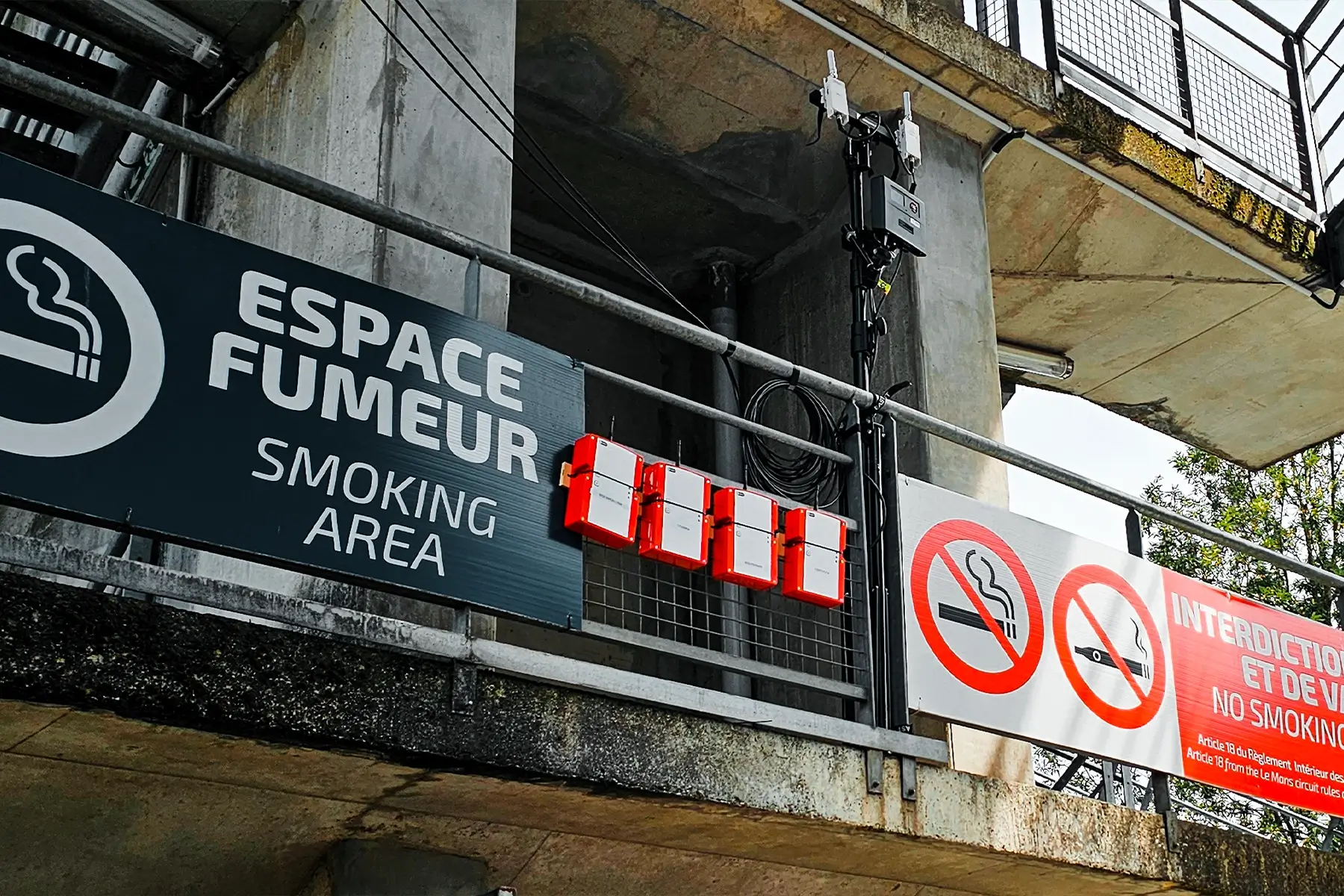
Fire Safety Regulations for Temporary Events
In France, the central legislation is the Arrêté du 25 juin 1980, which establishes the French fire and panic-safety regulations for ERP. It contains general provisions as well as specific rules for different types of establishments. The CTS regulations are particularly important for festivals, concerts, fairs, temporary hospitality areas and similar events. The rules apply to structures designed to be partially or completely enclosed, itinerant and covered by flexible material, including those used for circuses, shows, meetings, dances, banquets and sporting activities. They apply where the total public capacity is 50 people or more. Structures accommodating more than 19 but fewer than 50 people are subject to a more limited provision.
In the UK, however, employers, as well as building owners or occupiers, are legally required to carry out and regularly review a fire safety risk assessment. This requirement is set out in the Regulatory Reform (Fire Safety) Order 2005, which applies in England and Wales, and in the Fire (Scotland) Act 2005, as amended, together with the Fire Safety (Scotland) Regulations 2006. A fire safety risk assessment may be completed as a standalone exercise or incorporated into a wider risk assessment covering other health and safety hazards. The findings of the assessment must be used to identify and implement adequate and appropriate fire safety measures, helping to minimise the risk of injury or loss of life should a fire occur.
Fire Safety at the 24 Hours of Le Mans
Every year, near the French city of Le Mans, one of the world’s oldest endurance races occurs, drawing in massive crowds from all over the world. Unlike fixed-distance races whose winner is determined by minimum time, the 24 Hours of Le Mans is won by the car that covers the greatest distance in 24 hours. Therefore, the event is mostly made up of temporary structures, from accommodation to working paddocks.
Traditionally, temporary event organisers have relied on fire watch personnel and routine manual inspections to manage fire risks during the build-up and operation of large-scale events. Seeking a more robust and proactive solution, the organisers selected Ramtech’s WES system to deliver continuous fire monitoring and rapid incident detection throughout the event lifecycle.
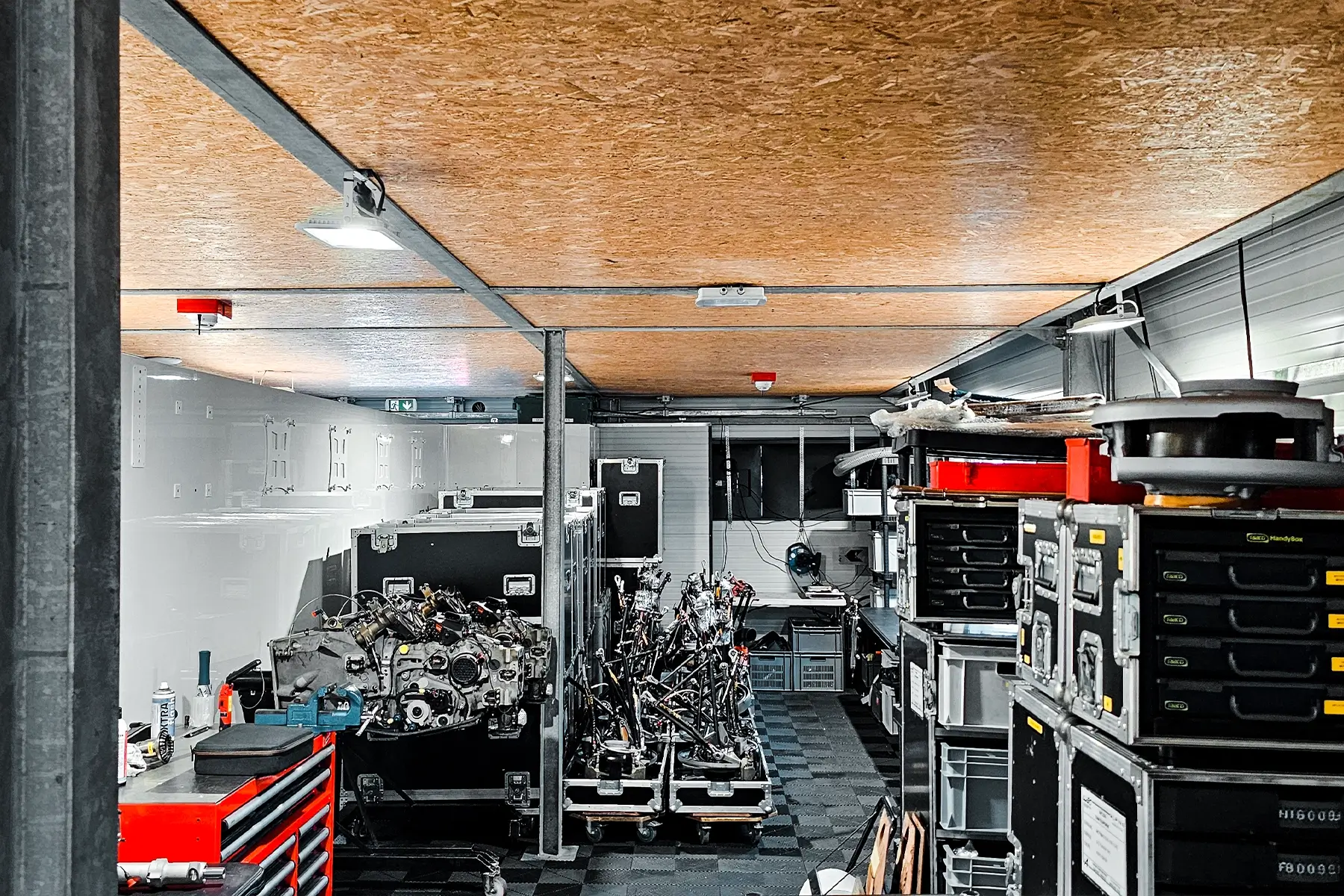
Benjamin Rigaud, Head of the Design Office at iEvents, commented: “We needed something that could be deployed quickly because we only have two weeks to deliver the projects. We also didn’t know the final interior layouts of the team areas on the ground floor, so we needed a highly flexible system that could be adjusted at any time without cabling.”
Why Wireless Fire Detection Works for Temporary Events
Due to the nature of these structures, which are often installed for a limited period and frequently reconfigured as events progress, a traditional fire alarm system is often impractical and cost-prohibitive. Wireless fire detection can provide an alternative where installing a conventional wired system is impractical, particularly where structures are temporary or layouts are expected to change.
Ramtech’s devices can be deployed rapidly with minimal disruption, while their wireless, modular design allows the system to adapt easily to changing site layouts and a wide variety of environments. Whether protecting festival grounds, temporary grandstands, hospitality areas or backstage facilities, WES provides a flexible, scalable solution that can evolve alongside the event, making it an ideal choice for organisers seeking both safety and operational efficiency.
FAQ
Foire aux questions
What fire safety measures are needed for temporary events?
Sauf lorsque la surveillance du feu est spécifiquement exigée par la législation, un système de permis de travail, un assureur, une personne compétente ou une évaluation des risques du projet, un système d'alarme incendie sans fil temporaire peut compléter ces mesures en offrant une protection continue sur des zones plus vastes du navire, y compris les zones susceptibles d'être inoccupées.
What is the best fire detection system for temporary events?
For temporary or frequently changing environments, wireless fire detection can provide a flexible alternative to a permanently wired system. Ramtech’s WES system can be rapidly deployed without extensive cabling, with devices added or repositioned as event layouts and requirements change.
Can a fire alarm system be moved as an event layout changes?
Yes. Wireless systems such as WES are designed to provide greater flexibility than fixed wired installations. Devices can be relocated or additional devices introduced as temporary structures, hospitality areas, paddocks and other event spaces change.
Can fire alarms at temporary events be monitored remotely?
WES can be connected to Ramtech’s REACT platform, allowing authorised users to receive WES event notifications through the REACT mobile app and web portal. This extends visibility beyond the immediate event site and helps keep relevant teams informed of important events.