



Le European Commission’s Industrial Maritime Strategy says up to 40% of the shipbuilding workforce could retire by 2030, while industry partners have committed to attracting 234,000 new workers. The OECD also identifies labour and skills shortages as a challenge facing shipbuilding and maritime equipment industries worldwide.
Against that backdrop, shipyards should be asking whether skilled labour is always being deployed where it adds the most value. Fire watch is an essential safety control during construction, repair and refit, and in many circumstances it is specifically required. But there is an important distinction between using fire watch where regulation or risk demands it and relying on people as the default method of temporary fire monitoring across a project. As skilled labour becomes harder to secure, that distinction matters.
One Task Can Mean One Dedicated Worker
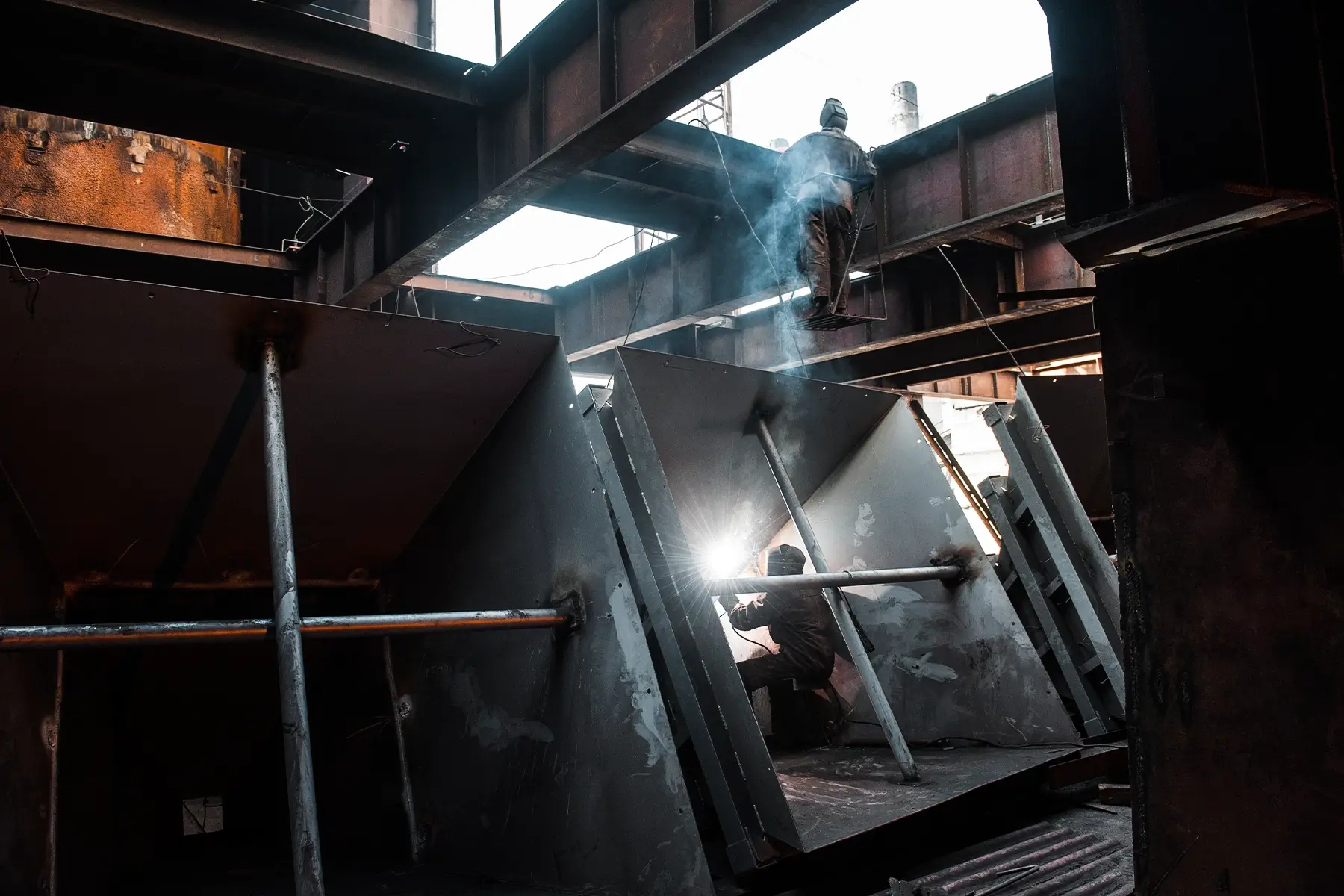
The labour implications become particularly clear around hot work. Under the US OSHA Shipyard Employment Standard, a fire watch must be posted when specified hazards are present, including where sparks or weld splatter could reach combustible materials or pass into adjacent areas. Once assigned, the fire watch cannot perform other duties while hot work is taking place and must remain for at least 30 minutes after completion, unless the area is assessed as presenting no further fire hazard.
UK guidance takes a similar approach. The Health and Safety Executive recommends fire watch during and for at least 30 minutes after hot work in certain conditions, extending to 60 minutes where ignition may be difficult to detect or slow to develop. The Maritime and Coastguard Agency also advises frequent checks for at least two hours after hot work in certain circumstances. The requirements exist for good reason. Heat, sparks and molten metal can travel beyond the immediate work area, while fire may develop after the work itself has finished. But across a major shipbuilding or refit project, the labour commitment can quickly add up.
What Does Fire Watch Mean at Shipyard Scale?
Consider a simple example. If ten simultaneous hot-work activities each require one dedicated fire watch for an eight-hour shift, that represents 80 labour hours a day. Across a five-day week, that becomes 400 hours. Over a 12-week project phase, it reaches 4,800 labour hours. This is an illustrative scenario rather than an industry average, but it demonstrates the scale of the issue. Those 4,800 hours are not simply a line on a spreadsheet. Where specialist trades are being diverted to monitoring duties, they represent hours that could otherwise be spent welding, pipefitting, completing electrical work or progressing other activities on the critical path.
On a major newbuild or refit, delays to those activities can have consequences further down the programme, affecting commissioning milestones, dock availability and ultimately vessel delivery. When skilled labour is already constrained, how those hours are allocated becomes a project delivery issue as well as a workforce issue. The EU’s Pact for Skills identifies welders, shipyard mechanics, electricians, shipwrights and pipefitters among the occupations European shipbuilding will continue to need through to 2030. In an industry already competing for those skills, thousands of hours devoted exclusively to monitoring deserve closer scrutiny.
This Is Not About Replacing Fire Watch
Where legislation, a hot-work permit, an insurer, competent person or risk assessment requires a dedicated fire watch, that requirement should not be compromised. A temporary wireless fire alarm system should not be positioned as a substitute for mandatory fire watch. The opportunity is to look at the wider monitoring burden. A fire watch is inherently local and time-bound. An individual monitors the area they have been assigned to protect for the period required. But fire risk can remain elsewhere across a vessel, including areas that are temporarily unoccupied, where work has finished for the day or where permanent fire protection is not yet operational. That is where a temporary wireless fire alarm system with automatic detection can provide an important additional layer of protection.
Protection Shouldn't Stop When the Workforce Leaves
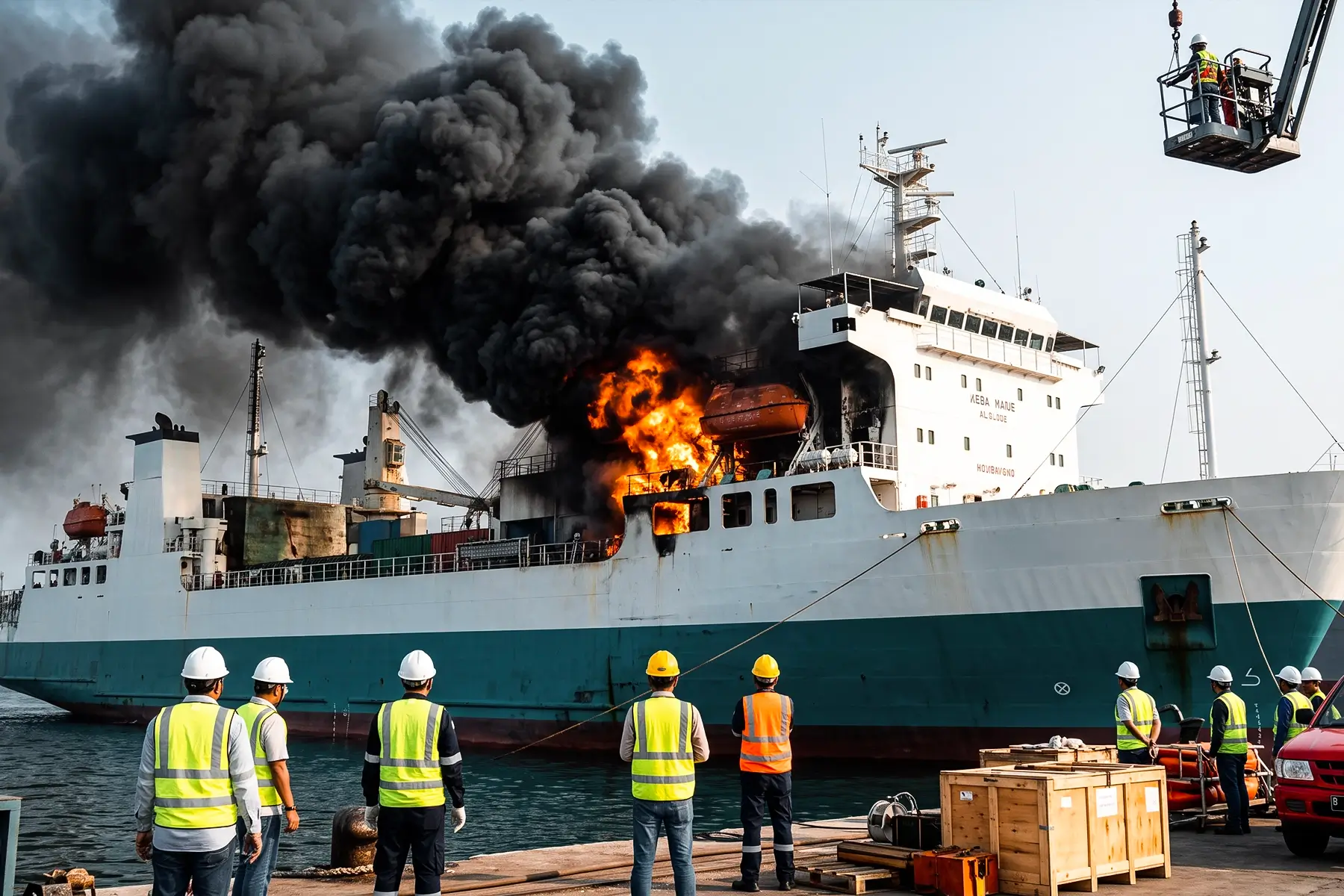
Shipbuilding and refit environments change constantly. Hot work moves between compartments. Temporary power is introduced. Combustible materials come and go. Spaces become enclosed. Meanwhile, the vessel’s permanent fire alarm system may be incomplete, isolated or not yet commissioned. Those risks do not only exist while somebody is standing nearby. Automatic smoke and heat detection can provide 24/7 protection, including overnight, at weekends and in temporarily unoccupied areas.
If fire is detected, the alarm can be raised automatically across the temporary wireless fire alarm network rather than relying solely on someone being present to first see or smell the signs of fire. WES is a temporary wireless fire alarm and evacuation system with automatic smoke and heat detection. Completely wireless and battery-powered, it can be installed and operational in a matter of hours without extensive temporary cabling.
As work progresses through the vessel, devices can also be repositioned so that the protection follows the changing risk. This is particularly valuable on projects where compartments, access routes and work areas can look very different from one phase to the next. The working environment matters too. Shipyards can be dusty, hot and challenging spaces for automatic detection. WES includes a dust-resistant smoke detector using dual-optic technology designed to differentiate between smoke and airborne dust, helping reduce nuisance alarms in dusty environments. Heat detection can be used where conditions make it more appropriate. When a WES detector identifies a fire condition, the system automatically raises the alarm across the WES network.
When connected to REACT, that alert can also be sent to designated personnel, helping responsible teams know that an alarm has been raised even if they are elsewhere on the project or off site. System events and responses are also recorded, providing an additional history that can support oversight and incident investigation. This creates a layered approach to protection: fire watch where human supervision is required, automatic smoke and heat detection providing 24/7 protection across the wider project, a temporary wireless alarm system to raise the alarm, and connected notification to help get that information to the people responsible for responding. Importantly, that protection can remain in place when work stops and people leave the area.
A Fire Can Continue Developing After the Hot Work Stops
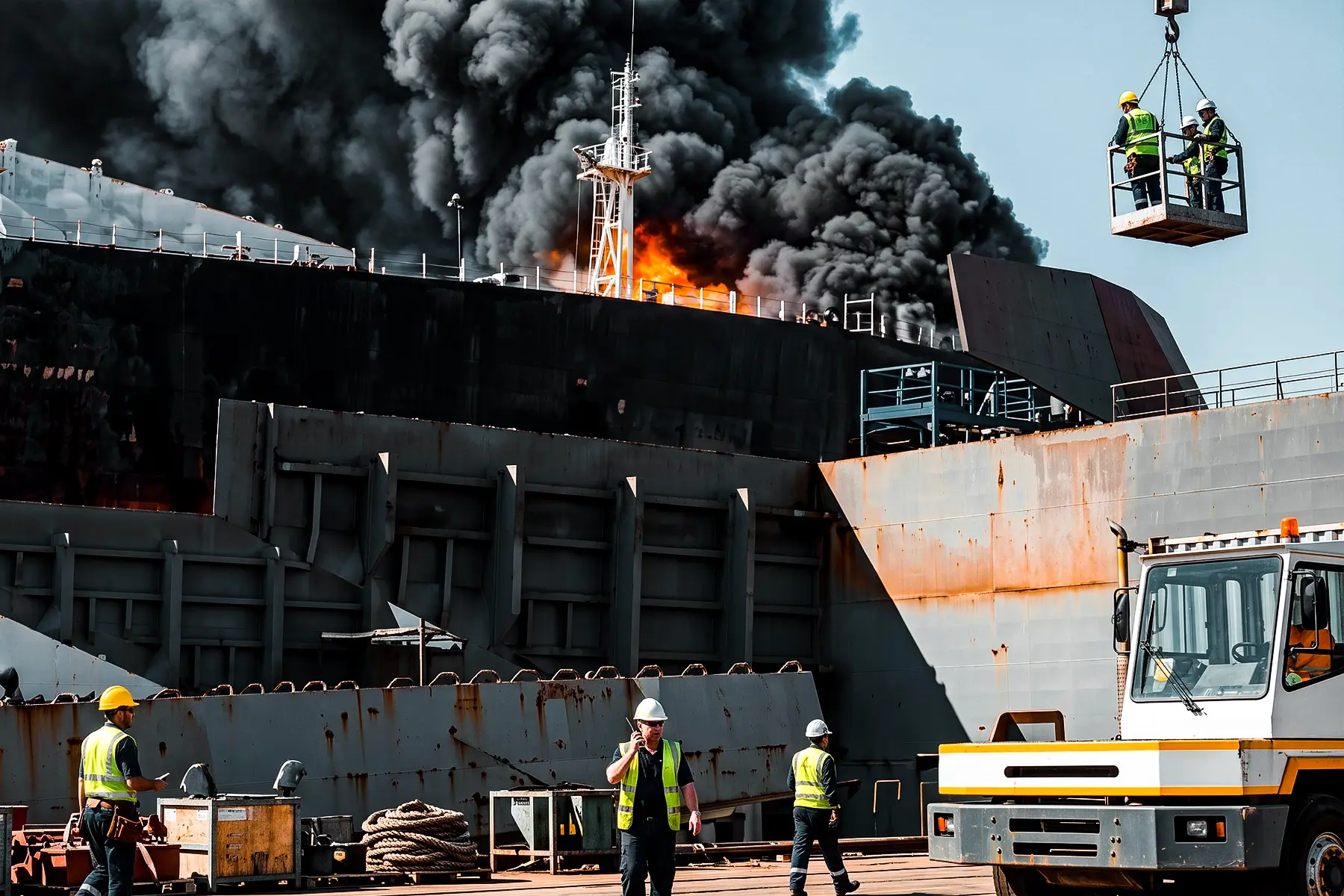
The importance of that continued protection becomes clearer when looking at what can happen during vessel maintenance. In March 2024, the bulk carrier Cuyahoga was undergoing maintenance in Ashtabula, Ohio, when a fire broke out in a cargo hold where hot work had been carried out. The US National Transportation Safety Board determined that the probable cause was the ignition of an epoxy coating, possibly from a smouldering fire associated with earlier hot work.
There were no injuries, but the vessel was declared a constructive total loss estimated at $11 million. The incident illustrates an important challenge with hot work. The absence of an obvious fire when the work finishes does not necessarily mean the risk has passed. Heat or smouldering material can remain concealed and develop into a larger fire later.
That is particularly significant inside a vessel, where multiple decks, compartments, voids and restricted lines of sight can make developing fire difficult to identify. Automatic detection provides another means of identifying that developing risk, including during periods when the immediate area is no longer occupied. The wider financial exposure can also be significant. Allianz Commercial found fire and explosion to be the most expensive cause of marine insurance claims by value across more than 240,000 claims worth approximately €9.2 billion. Fire and explosion represented 18% of the value analysed, equivalent to around €1.65 billion.
Those figures cover marine insurance more broadly rather than shipyards specifically, but they demonstrate the potential severity of fire within maritime environments. For a shipyard, the consequences can extend beyond physical damage to investigation, rework, disruption to other trades, commissioning delays, dock availability and vessel delivery. Early detection is therefore not simply a fire-safety consideration. It can also help protect project continuity.
A Smarter Use of People and Technology
Fire watch will remain an essential part of shipyard safety. The opportunity is to become more deliberate about where it is required and how the wider vessel is protected. Where dedicated fire watch is mandatory, it stays. Beyond that, a temporary wireless fire alarm system with automatic detection can provide 24/7 protection across changing and unoccupied areas, automatically raise the alarm if fire is detected and, when connected to a notification platform such as REACT, help alert responsible teams wherever they are. That matters for safety, but it also matters when skilled labour is becoming increasingly difficult to secure.
When thousands of skilled hours can be absorbed by monitoring over the course of a project, the question is not whether technology can replace people. It is whether technology can help people spend more of their time where their expertise is needed most, while providing another layer of protection around the clock. Effective fire protection should help prevent a project from going wrong.
FAQ
Frequently Asked Questions
Can a temporary wireless fire alarm system replace fire watch in a shipyard?
Not where fire watch is specifically required by legislation, a permit-to-work system, an insurer, competent person or project risk assessment. A temporary wireless fire alarm system can complement these controls by providing continuous protection across wider areas of the vessel, including areas that may be unoccupied.
Can temporary fire alarms protect a vessel outside working hours?
Yes. Automatic smoke and heat detection can provide 24/7 protection, including overnight, at weekends and during periods when areas are unoccupied. Systems such as WES can automatically raise the alarm when a fire condition is detected rather than relying solely on someone being present to identify the fire.
How long should a fire watch remain after hot work?
Requirements depend on the jurisdiction and risk. OSHA specifies at least 30 minutes in relevant circumstances, while HSE guidance recommends at least 30 minutes and potentially 60 minutes where ignition may be difficult to detect or slow to develop. UK maritime guidance can require monitoring for longer.
How can shipyards reduce nuisance alarms from temporary fire detection?
Detector selection should reflect the working environment. In dusty areas, for example, the WES Dust-Resistant Smoke Detector uses dual-optic technology designed to differentiate between smoke and airborne dust. Heat detection may be more appropriate in other areas depending on the conditions and risk.